
Protect Your Style. Protect Your Edges.
Enjoy the beauty of a finished look while keeping comfort, communication, and your hairline in the conversation. The final braid is finished. You turn toward the mirror, and for a moment the whole appointment comes together: the shape, the parting, the way the style frames your face. You can already imagine the earrings you will wear with it.
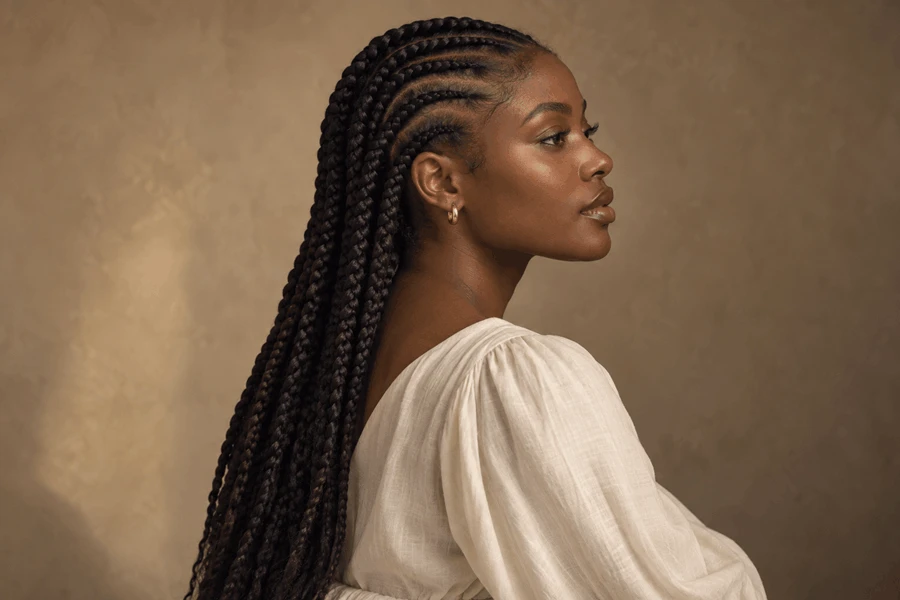
Enjoy the beauty of a finished look while keeping comfort, communication, and your hairline in the conversation.
The final braid is finished. You turn toward the mirror, and for a moment the whole appointment comes together: the shape, the parting, the way the style frames your face. You can already imagine the earrings you will wear with it.
Then you move your head and feel the pulling.
It can be surprisingly difficult to speak at that moment. You have spent time and money. The stylist has worked hard. You want to love the result, and you may have learned to treat discomfort as an ordinary part of looking polished.
Your comfort belongs in the finished result. You can appreciate the artistry and still ask for an adjustment. You can enjoy braids, twists, an updo, or extensions while paying attention to what the style is asking of the hair beneath it.
This is a conversation about keeping choice and care together, beginning before you sit in the chair.
Understand what protection means
The phrase protective style describes an intention. It is not a guarantee attached to a particular name. A look may reduce how often you handle the lengths while introducing other demands, such as weight, tension, or maintenance you had not planned for.
In their academic review of traction alopecia, Billero and Miteva describe the role of repeated pulling and the importance of recognizing the condition before long-standing damage becomes permanent. The problem is mechanical stress, not whether a style is fashionable or culturally meaningful. Traction Alopecia: The Root of the Problem, 2018 (https://pmc.ncbi.nlm.nih.gov/articles/PMC5896661/)
That distinction allows a more useful conversation. Instead of asking whether all braids are good or bad, ask how this particular style will be installed, maintained, and removed on your particular head. Your history matters, including any areas that already feel tender or look thinner.
A photograph cannot answer all those questions. An informed consultation can help you decide whether the look needs adjusting or whether another option would serve you better right now.
Bring your priorities to the consultation
Before the appointment, choose what matters most. Is it the outline of the style, the length, the convenience, or an effect around the face? If you know the priority, it is easier to discuss a lighter, looser, or simpler version without feeling that the entire idea has been lost.
Tell the stylist about previous discomfort and any concerns you have noticed. Avoid covering up a problem simply because you are embarrassed. The information can influence whether the service should proceed or whether medical assessment should come first.
Ask what maintenance is expected. Will you be able to cleanse your scalp? How will the style be dried? What is the removal process? What would make you return sooner? A professional should be willing to explain the practical life of the hairstyle, not only show the finished photograph.
Discuss cost and timing clearly. Make room in your budget and schedule for appropriate upkeep and removal. A plan that uses every available dollar on installation may leave you feeling trapped in a style after it no longer suits your needs.
Speak while the work can still be adjusted
You do not have to wait until the end to report pulling. Describe the location and sensation: “This section feels tight when I turn my head.” “That attachment is uncomfortable.” “I need a break before we continue.” Specific information gives the stylist something to address.
The American Academy of Dermatology identifies pain, stinging, crusting, and scalp tenting as reasons to change a hairstyle promptly. It also encourages early assessment of hair loss. AAD: Hairstyles That Pull Can Lead to Hair Loss (https://www.aad.org/public/diseases/hair-loss/causes/hairstyles)
You are not required to diagnose a problem from the chair. You are required only to take your own discomfort seriously enough to mention it. If the response dismisses pain as something you must tolerate for beauty, reconsider the service.
For some women, speaking up is the hardest part of the appointment. Prepare a sentence in advance if that helps. Bringing a clear reference and a clear limit can make the conversation feel less like a confrontation and more like collaboration.
Let the hairline be part of the design
There is no single acceptable way for the small hairs around your face to look. You may enjoy styling them. You may prefer leaving them alone. Neither choice needs to become a measure of whether you are polished enough to leave the house.
Before adding another daily step, ask whether you actually like the result or feel obliged to reproduce an online standard. A style can be finished without every hair being arranged into a pattern. Your hairline does not owe a camera the same appearance every morning.
If you have noticed a change, avoid simply asking a stylist to hide it and moving on. Concealment may be a personal styling choice, but it should not replace understanding what is happening. A dermatologist can assess the cause and discuss options appropriate to you.
Keep the emotional side in view too. Hairline concerns can affect confidence, and you deserve a conversation without blame. A caring professional should help you make decisions rather than make you feel ashamed of how you arrived there.
Give the style a realistic life at home
Think about the days after the appointment. How will you sleep comfortably? What will your work or exercise routine require? Will a hat, uniform, or head covering change how the style feels? Do you have enough time for the recommended cleansing and drying?
Ask these questions while choosing the style, rather than discovering every inconvenience afterward. A look that suits someone else's week may not suit yours. You can admire it and choose something different without abandoning your sense of style.
Keep the aftercare instructions in a place you can find. If they are unclear, ask for clarification before improvising. If a product causes a concerning reaction or symptoms persist, seek appropriate care instead of adding layers to disguise the problem.
Schedule a moment to look at your scalp and hairline in ordinary lighting. The aim is awareness, not constant inspection. If you notice a change, make a note of when it appeared and what else was happening. Useful information is more valuable than repeated anxious checking.
Do not let the price decide how long you endure discomfort
It is understandable to want value from an expensive appointment. Removing a style earlier than planned can feel wasteful. But money already spent cannot tell you whether continuing to wear the style is appropriate.
Contact the stylist about an adjustment when needed. If the concern is medical, seek medical advice. Avoid turning the wish to get your money's worth into a reason to ignore your own experience.
For future appointments, consider the whole cost of a style rather than the installation alone. A less elaborate option may give you more flexibility. A design that requires less follow-up may fit a demanding season better. Your financial and practical circumstances are legitimate parts of the decision.
There is dignity in choosing what you can maintain comfortably. A hairstyle should not leave you feeling as though beauty has placed you under an obligation you cannot afford to change.
Make removal part of the original plan
A completed style still has an ending. Ask how to take it down, who can help, and how much time to reserve. If you know you become impatient during lengthy removal, plan support rather than hoping that this time will be different.
Prepare the space and the tools recommended for the method. Choose a time when you are not racing toward another commitment. If you are uncertain where your own hair ends beneath added hair, seek help instead of guessing with scissors.
After removal, take time to notice how your scalp feels and whether anything deserves professional attention. Avoid immediately covering a concern with another installation. Give yourself the opportunity to make an informed next choice.
You may decide to repeat the style with adjustments, try something simpler, or enjoy your hair loose for a while. The decision can be based on experience rather than loyalty to a look that no longer serves you.
Carry useful information into the next appointment
When a style works well, record the details you want to repeat: the length, the arrangement, the amount of maintenance, and how comfortably it fitted your week. A photograph captures the appearance, but a few notes preserve the experience. Both can help you explain your preferences later.
If something did not work, describe it without turning the next consultation into an accusation. You can say that a particular area felt uncomfortable or that the upkeep was more than you expected. A thoughtful professional can use that information to discuss alternatives. You are building a clearer understanding of what suits you, and every appointment can contribute something to that understanding.
Keep the pleasure in the picture
Protecting your edges does not require giving up the joy of getting your hair done. There can still be artistry, anticipation, conversation, and the little lift of recognizing yourself in a new shape.
Imagine an appointment where you arrive with ideas and leave with information. You know what the style needs. You have spoken about comfort. You have a plan for its care and its ending. The result feels beautiful partly because you have remained present in every decision.
That is worth asking for. Choose professionals who respect the conversation, and allow your preferences to evolve. Your next style can express creativity without requiring silence about discomfort. The woman in the mirror deserves the look she enjoys and the consideration that lets her enjoy wearing it.
© 2026 TopBlackBeauty.com.

As a passionate news reporter, I am fueled by an insatiable curiosity and an unwavering commitment to truth. With a keen eye for detail and a relentless pursuit of stories, I strive to deliver timely and accurate information that empowers and engages readers.
Comments (0)