
Meet Your Next Signature Style
Find a look that feels recognizable, wearable, and entirely open to the woman you are becoming. Sometimes the wish for a new hairstyle arrives quietly. You turn your head in the mirror and imagine a different shape. You see a woman on the street whose hair seems to belong to her so completely that you wonder what that feeling would look like on you.
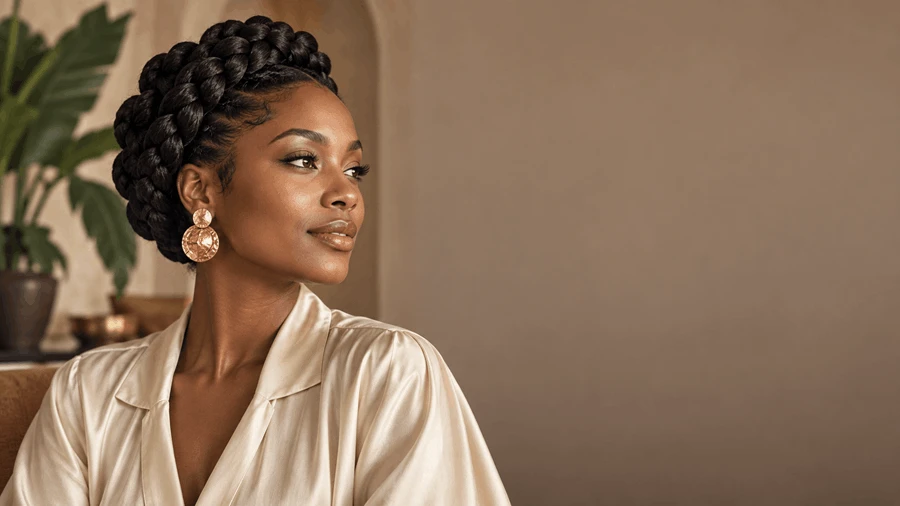
Find a look that feels recognizable, wearable, and entirely open to the woman you are becoming.
Sometimes the wish for a new hairstyle arrives quietly. You turn your head in the mirror and imagine a different shape. You see a woman on the street whose hair seems to belong to her so completely that you wonder what that feeling would look like on you.
Other times, the wish arrives with a change in your life. A birthday. A new job. The end of a demanding season. An ordinary Tuesday when you realize you have been asking the same hairstyle to represent you for longer than you intended.
A signature style does not have to be permanent or instantly recognizable to everyone else. It can simply be a look you enjoy returning to because it fits your taste and your days. The useful question is not which trend will transform you into a more interesting woman. It is which choices will help you feel more at ease expressing the woman already here.
Begin with a feeling you can describe
Before collecting photographs, choose a few words for the experience you want. Perhaps polished, playful, soft, bold, practical, or unhurried. Then ask what those words mean in daily life. Does polished mean a shape that falls into place quickly, or a finish you enjoy maintaining carefully?
Two women can choose the same word and want completely different hair. Your description becomes useful when it includes specifics: how much time you want to spend, whether you like hair near your face, how often you enjoy changing the look, and what makes you feel comfortable at work or at home.
Avoid choosing only words that describe how you hope other people will react. Admiration can be pleasant, but it is unreliable as a care plan. Include something about your own experience: easy to wear, comfortable to move in, enjoyable to style, or simple enough for the mornings you actually have.
Collect details instead of collecting whole people
When saving inspiration, identify the element that catches your attention. It may be a rounded silhouette, a side part, the movement of locs, a close crop, a braided crown, or a particular balance around the face. Naming the detail keeps the photograph from becoming an instruction to resemble another woman.
Choose several references that share a quality you like. A small, thoughtful collection is often clearer than a folder of dozens of unrelated looks. Include at least one ordinary, wearable example alongside the special occasion images that first caught your eye.
Bring a photograph of yourself wearing a style you have enjoyed, too. Explain what worked. Perhaps it was easy to maintain, or you loved how it looked with your favorite earrings. Your own history contains useful information that can disappear when every reference comes from somebody else's carefully chosen moment.
Give your lifestyle an equal vote
Consider what your hair needs to do during a normal week. You may move between a uniform and evening clothes, exercise most mornings, travel often, or spend long periods caring for someone else. A style can be beautiful and still ask for more maintenance than you want to provide.
Be honest about the tasks you enjoy. Some women love the process of styling. Others want a reliable result with minimal daily involvement. Neither preference is more feminine, more natural, or more serious. The style should reflect your interest as well as your appearance.
Include your physical needs. If reaching overhead is difficult, long styling sessions may be impractical. If you need a head covering or particular work equipment, discuss how the look will function with it. A thoughtful consultation treats those details as part of design, not as inconvenient exceptions.
Let hair and scalp condition shape the choice
An academic review of Black women's hair care describes the relationship between grooming practices, hair-shaft concerns, and scalp disorders. Its relevance to choosing a style is straightforward: the condition of your own hair and scalp belongs in the conversation alongside the desired appearance. Anais Brasileiros de Dermatologia, 2015 (https://pmc.ncbi.nlm.nih.gov/articles/PMC4560533/)
Tell your stylist about recent services, known sensitivities, and any concern you are already having assessed. Ask what is realistic now and what may require a different plan. A beautiful result should not depend on ignoring information that matters to your comfort or care.
If you have unexplained loss or persistent symptoms, seek medical advice rather than asking a haircut or installation to solve the uncertainty. You can pursue a style you enjoy while also getting an appropriate evaluation. Aesthetic choices and health questions can be addressed together without pretending they are the same thing.
Use the consultation to learn, not just agree
Explain your inspiration and then ask the stylist what they notice. Which parts of the reference are achievable with your hair as it is? Which depend on a particular styling session, added hair, or a maintenance commitment? What alternatives could give a similar feeling with a different practical burden?
Ask to see relevant examples of the professional's work. You are looking for more than a beautiful portfolio. You want evidence that they can discuss the process, adapt the idea, and explain what your role will be after the appointment.
If a recommendation surprises you, ask for the reason. You do not need to accept immediately or become defensive. A useful consultation can include disagreement followed by clarification. The aim is a decision you understand, rather than a result you hope you will eventually learn to manage.
Try a smaller change when you want information
Not every desire for freshness requires a dramatic transformation. You might explore a different arrangement, a temporary styling approach, or a modest shape adjustment with professional guidance. A smaller change can help you learn which part of the idea you actually enjoy.
This is especially useful when the inspiration includes several changes at once. If you imagine a new length, color, and daily routine together, it may be difficult to know which element matters most. Discuss whether a staged approach would suit your goals and the condition of your hair.
A gradual decision is not a timid one. It can be a way to participate more actively in the process. Equally, you may understand the commitment and choose something bold. The value lies in the clarity of your choice, not the size of the difference other people can see.
Talk about the full price of the look
Ask about the initial service, future appointments, products, and the time involved in maintaining the result. Include travel and scheduling. A look that fits the first appointment budget may still require a pattern you do not want to sustain.
Tell the stylist where you have flexibility and where you do not. Perhaps you can spend more at the initial visit but need simple home care. Perhaps regular appointments are enjoyable for you, but a complicated morning routine is not. Those distinctions help shape a realistic recommendation.
Do not apologize for asking. Clear financial information is part of a professional service. You should be able to admire a beautiful look and still decide that its maintenance does not belong in your current budget. There will be other ways to express what you like.
Leave space between the mirror and everyone else's opinion
After a change, you may need time to become familiar with your reflection. That first moment can contain pleasure, surprise, uncertainty, or all three. You do not have to decide immediately whether the new style is your forever look.
Choose whose opinions you invite. A trusted friend who listens to what you wanted may be more useful than a large audience reacting to a single photograph. People can prefer the old style because it is familiar, not because the new one fails to suit you.
You can respond without defending the decision at length. “I'm enjoying something different” or “I'm seeing how I like it” is enough. Your appearance does not become a public committee project merely because someone notices that it changed.
Build a wardrobe of possibilities
A signature style can have more than one expression. You may love a familiar base shape with different arrangements for work, weekends, and celebrations. Ask your stylist to show you a manageable variation or two if that is something you want.
Practice at a time when the result does not need to be perfect. Learning a small technique before an important event is kinder to yourself than discovering its challenges while already dressed and late. Keep the tools and instructions simple enough that you can repeat the process.
There is also nothing wrong with wearing your favorite look consistently. Repetition can reflect confidence, convenience, or simple pleasure. You do not owe anyone a constant stream of transformations to prove that you are creative or that you still care about your appearance.
Let age expand the conversation
If your tastes, texture, density, or color have changed over time, bring that reality into the discussion without treating it as an apology. The style that served you at twenty-five does not have to remain the standard for every decade afterward.
You may enjoy silver strands, choose color, prefer less length, or discover an entirely different shape. These are personal choices. They do not need to carry a lesson about aging gracefully for an audience that has not been invited to judge.
Ask what feels enjoyable now. Perhaps you want less maintenance and better earrings. Perhaps you finally want the dramatic look you once thought you were too shy to wear. There is room for practical decisions and playful ones at every age.
Know when the signature has become a habit you no longer love
A look can become familiar enough that you stop asking whether it still suits you. Revisit the question occasionally. Are you wearing it because you enjoy it, because it is convenient, or because changing feels like too much work? All three are understandable, but they suggest different next steps.
You do not have to abandon a familiar style to prove growth. You can keep it, adjust it, or plan a change when the timing is better. Your appearance is allowed to evolve unevenly, just as the rest of life does.
The next signature style may announce itself with a dramatic first look, or it may become a favorite quietly over several ordinary mornings. Either way, let it offer something tangible: comfort, pleasure, ease, expression. When you catch your reflection on the way out and feel a small, uncomplicated yes, that may be all the explanation the style needs.
© 2026 TopBlackBeauty.com

As a passionate news reporter, I am fueled by an insatiable curiosity and an unwavering commitment to truth. With a keen eye for detail and a relentless pursuit of stories, I strive to deliver timely and accurate information that empowers and engages readers.
Comments (0)