
The Power of a Great Fit
Clothes should make room for your body, your movement, and the way you want to feel. You can spend a long time blaming yourself for a garment that was never designed quite right for you. The trousers fit at the hips but gap at the waist. The shirt closes comfortably until you reach forward. The dress looks promising from one angle and keeps twisting as you walk. In a fitting room, these ordinary construction problems can begin to feel strangely personal.
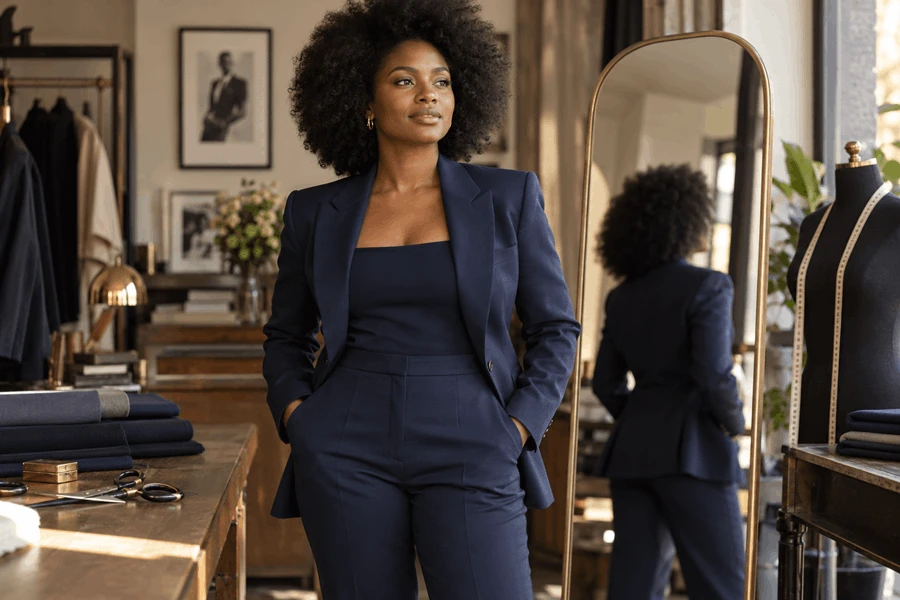
Clothes should make room for your body, your movement, and the way you want to feel.
You can spend a long time blaming yourself for a garment that was never designed quite right for you. The trousers fit at the hips but gap at the waist. The shirt closes comfortably until you reach forward. The dress looks promising from one angle and keeps twisting as you walk. In a fitting room, these ordinary construction problems can begin to feel strangely personal.
They are information about the relationship between a particular garment and a particular body. A size label cannot describe every proportion, preference, or movement. Two people who wear the same nominal size may need very different shapes. The goal is to find clothes that work for you, with enough ease and the appearance you want, rather than to make your body obey the assumptions in a pattern.
A great fit can be quiet. You stop tugging at the hem. You sit without planning how to hold yourself. You lift your arms and return to the conversation. That freedom is worth more attention than the satisfaction of fitting into a smaller number that leaves you uncomfortable for the rest of the day.
Decide what fit means for this garment
Fit is not always close-fitting. An oversized shirt, a fluid dress, and a sharply tailored jacket are meant to relate to the body differently. Begin by considering the intended shape and your own preference. A loose garment can fit beautifully, while a tight one can fit poorly even if it technically fastens.
Ask where you want structure and where you want movement. You might like definition at the shoulders with room through the torso, or a fitted waist with a generous skirt. These choices do not have to follow a body-shape classification. They can begin with what you find comfortable and visually pleasing.
Think about the garment's purpose. Trousers for a long seated workday may need different ease from a piece worn briefly for an event. A jacket intended to go over a sweater needs room for that layer. Try the item under conditions close to the ones in which you will use it.
Treat the label as a starting point
Sizing differs among brands and designs, and the same person may choose different sizes for different effects. Use the label to locate options, then let the garment provide the answer. There is no achievement in choosing a number that makes you uncomfortable, and no failure in needing another one.
Measurements can help, especially when shopping online. Follow the seller's measurement instructions, compare the size chart, and distinguish body measurements from garment measurements. If possible, measure a similar item you already wear comfortably. Ask about unclear dimensions before relying on a guess.
Even accurate measurements do not tell the whole story. Fabric stretch, cut, lining, and construction affect how clothing feels. Return terms matter when you cannot try something on. Leave tags attached and avoid altering an item until you have decided to keep it within the seller's conditions.
For secondhand clothing, remember that a previous owner may have changed the original size or shape. Actual measurements and condition are more useful than the label alone. A garment can be a wonderful find and still require a decision about whether the fit is workable for you.
Use movement as part of the fitting
A mirror offers one kind of information; movement offers another. Sit down, take a few steps, reach forward, and raise your arms in ways relevant to your day. Notice whether the garment pulls, shifts, or limits you. You should not need to remain in one flattering pose to keep an outfit functioning.
With a shirt or jacket, pay attention to how the shoulders and upper body feel when you move. With trousers, notice the waist, seat, rise, and freedom through the legs. With a dress or skirt, check how it behaves while seated and whether it returns comfortably after walking. These observations are starting points, not professional tailoring diagnoses.
Try the shoes you intend to wear when judging a hem. A trouser length that works with one heel height may drag with another. If you want a pair to serve several shoes, discuss that aim before hemming. Sometimes a slightly different length is a useful compromise; sometimes separate options make more sense.
Consider pockets and fastenings in use. A pocket that distorts the garment when holding your essentials may be decorative rather than useful for your needs. A closure you cannot manage comfortably can turn a lovely item into a daily frustration. Practical fit includes these details.
Keep your self-image out of the verdict
The review Dress, Body and Self by Kim Johnson, Sharron J. Lennon, and Nancy Rudd (https://experts.umn.edu/en/publications/dress-body-and-self-research-in-the-social-psychology-of-dress/) examines relationships among clothing, the body, and the self, alongside research on how dress affects perceptions. It helps explain why getting dressed can feel more emotionally charged than simply selecting fabric.
Knowing that does not mean every difficult fitting needs a deep interpretation. Sometimes the trousers are simply wrong. You can name the problem precisely: too little room at the seat, an uncomfortable waistband, a sleeve that restricts movement. Specific language keeps the decision focused on something that can be changed or declined.
If shopping begins to feel harsh, take a break. Fatigue, bright fitting-room lights, and too many unsuccessful options can make it harder to evaluate anything kindly. You can return another day, try a different retailer, or begin with a garment you already trust. There is no obligation to force a useful decision out of an exhausting session.
Avoid purchasing clothing as a condition your body must meet later. If you intentionally keep something for a possible future use, separate that choice from your current wardrobe needs. The person getting dressed this week still deserves enough comfortable options to live her life without waiting.
Know what a tailor can help you explore
Alterations can make a good garment more useful, but they are not magic. A skilled tailor can assess the fabric, seam allowance, construction, and requested change. Ask what is feasible, what the result is likely to look like, and what the full cost will be before assuming an almost-right piece is a bargain.
Bring the shoes and underlayers relevant to the fit. Explain how you plan to wear the garment and what bothers you. “It pulls when I sit” gives more useful information than “make it flattering.” You can describe the appearance you want while also demonstrating the movement the clothing needs to allow.
Start with a valued piece and a clear, manageable request if you are new to alterations. A hem or a minor adjustment can help you understand the process. More extensive changes may not be worthwhile for every garment. You can appreciate the tailor's skill and still decide that buying a different cut is the better option.
When collecting the item, try it on again before leaving if possible. Move as you did during the fitting and check that the change addresses the problem. Ask about anything that still feels uncertain. Clear communication is part of getting a result you can enjoy.
Build a record of what works
After finding a successful fit, note the details. You might prefer a certain rise, sleeve opening, inseam, or amount of room at the waist. Measurements can be useful, but descriptions of comfort matter too. Keep the information somewhere accessible when shopping instead of expecting yourself to remember every garment's construction.
Do not assume a successful brand will work in every design. Use previous experience as a helpful lead, then evaluate the new piece. Your body and preferences can change, and manufacturers can vary their cuts. Attention to the actual item remains worthwhile even when the label is familiar.
Photographs can help you remember proportions you enjoy, especially if you compare them with notes about how the outfit felt throughout the day. A look that photographs well but becomes uncomfortable after an hour may not be the reference you want for future purchases.
You can also keep a short list of fit problems you no longer want to negotiate. Perhaps you are tired of straps that slip, waistbands that roll, or sleeves that catch under jackets. Naming those patterns gives you permission to stop buying the same difficulty in a new color.
Let fit support your taste
Once the practical questions are settled, return to pleasure. Do you like the shape? Does the garment move in a way you enjoy? Does it work with the rest of your wardrobe? A technically adequate fit is useful, but your own response is part of the decision. You are allowed to want something that feels good and looks like you.
There is room for experimentation within that standard. You can try a wider trouser, a shorter jacket, or a softer dress without treating the change as a permanent declaration. Keep the features that serve you and let go of the ones that do not. Style becomes more flexible when fit is a practical conversation instead of a judgment.
The most valuable result may be a change in where you place responsibility. When a garment does not work, you can set it aside and continue looking. Your body has not failed an exam. Somewhere there may be a different cut, a useful adjustment, or an entirely different idea that gives you more room to move. That room belongs in your wardrobe.
© 2026 TopBlackBeauty.com

As a passionate news reporter, I am fueled by an insatiable curiosity and an unwavering commitment to truth. With a keen eye for detail and a relentless pursuit of stories, I strive to deliver timely and accurate information that empowers and engages readers.

Comments (0)