
Style Has No Age Limit
Celebrate the freedom to dress for the woman you are today. At some point, a perfectly ordinary clothing choice can acquire an unnecessary question: Am I too old for this? The question may appear beside a bright blouse, a pair of jeans, a sleeveless dress, or a lipstick you have worn happily before. Nothing about the object has changed. Yet someone else's idea of what a woman should look like at a certain age has entered the room.
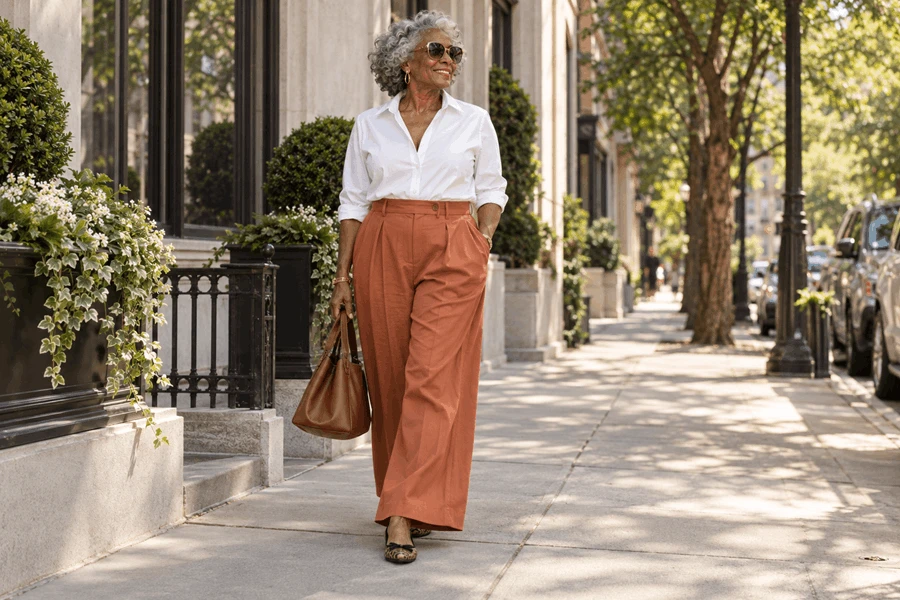
Celebrate the freedom to dress for the woman you are today.
At some point, a perfectly ordinary clothing choice can acquire an unnecessary question: Am I too old for this? The question may appear beside a bright blouse, a pair of jeans, a sleeveless dress, or a lipstick you have worn happily before. Nothing about the object has changed. Yet someone else's idea of what a woman should look like at a certain age has entered the room.
You may not even know whose voice it is. Perhaps it comes from a relative, a magazine, a passing comment, or years of seeing older women represented within a very narrow range. It can become so familiar that it sounds like your own judgment. Before accepting it, pause. Is the garment uncomfortable or unsuitable for your plans, or have you simply been taught that pleasure should become quieter as you grow older?
Your answer can be practical and personal. You may want different shoes, softer fabric, or a new silhouette now. Those preferences deserve attention. They do not require you to apologize for enjoying color, beauty, sensuality, elegance, or play. Getting older gives you a new present to dress for, not an instruction to disappear from your own life.
Question the rule before obeying it
Sociologist Julia Twigg's Fashion, the Body, and Age (https://research.kent.ac.uk/caa/wp-content/uploads/sites/2290/2017/12/Fashion-the-Body-and-Age.pdf) examines how expectations around clothing help shape the social experience of age. She discusses pressures toward reduced visibility in later life, while also questioning the newer demand that older women remain fashionably youthful. Both can become restrictions when they leave little room for individual preference.
That distinction matters. Freedom does not mean exchanging one instruction for another. You do not have to dress discreetly because you are older, and you do not have to adopt every new look to prove you remain interesting. You can choose a quiet outfit because you love it. You can choose a dramatic one for exactly the same reason.
When you encounter an age-based rule, ask what useful information it contains. “These shoes are uncomfortable for a long walk” offers something concrete. “Women your age should not wear that” does not tell you much about the garment, the occasion, or your own experience. Specific questions are more useful than a birthday treated as a dress code.
Meet your current body with practical kindness
Bodies change across a lifetime, sometimes gradually and sometimes quickly. Your fit preferences may change with them. A waistband that once felt fine may now bother you. A shoulder shape you used to favor may no longer sit as you like. You can respond to these changes without turning every fitting into an argument with the past.
Take measurements when they would help, and treat them as useful information. Compare garments with something that fits comfortably now rather than relying only on a size you wore years ago. Look for room where you need it and structure where you enjoy it. Clothes should accommodate the person wearing them.
If dressing itself has become difficult, consider features that make it easier: accessible fastenings, manageable sleeves, comfortable openings, or designs you can put on while seated. Adaptive options and skilled alterations may offer possibilities. Ease of use can belong within a beautiful wardrobe instead of being treated as a separate, less stylish category.
You can also choose how much of your body to show according to your taste and comfort. Sleeves, necklines, and hemlines do not need to be selected as apologies for age. A woman may prefer coverage for many reasons, including faith, warmth, or aesthetics. Another may enjoy bare arms. Neither choice needs a defensive explanation.
Keep the pleasures you still recognize
There may be elements of your style that have remained steady for decades. You still love a certain shade of blue, a fine scarf, an unusual ring, or a beautifully cut shirt. Those preferences can provide continuity through other changes. Familiarity does not make them outdated; it makes them part of your history.
Bring a favorite detail into a current outfit. An older piece of jewelry might sit beautifully beside a simple modern neckline. A treasured jacket may work with a different trouser shape. You do not need to preserve the entire original outfit in order to keep the part that still delights you.
At the same time, give yourself permission to retire a preference. You may no longer enjoy heels, or you may discover that you do. You may want less jewelry or more color. A long-standing reputation as “the woman who always wears black” does not prevent you from trying something else. Other people can learn the updated version.
Photographs from earlier years can be a source of pleasure rather than a standard you must reproduce. Notice the confidence, humor, or particular detail you loved. Then ask how that quality might appear in your life now. You are continuing a relationship with yourself, not competing with a younger photograph.
Choose comfort with aesthetic attention
Comfort need not be treated as the absence of style. A shoe can have a pleasing shape and still be one you enjoy walking in. Trousers can offer a forgiving waist and a graceful line. A soft jacket can provide enough structure for the look you want without making movement difficult.
When shopping, describe the combination you need rather than assuming the qualities are incompatible. You may want a light shoe with a secure fastening, a dress with pockets and room through the torso, or a shirt that looks crisp but feels gentle. Precise requirements can help you search more effectively.
Test the garment in the position in which you will spend time wearing it. A seated fit may matter more than a standing pose. Check how fabric gathers, whether the hem stays where you want it, and whether a closure is easy to reach. Your actual use deserves more attention than a retailer's styling photograph.
A tailor or dressmaker may be able to adapt a favorite item, but ask about feasibility and cost before committing. Some changes are straightforward, while others affect the whole design. You are allowed to decide that another garment is the simpler and more satisfying option.
Let visibility be a choice
Some days you may enjoy an outfit that attracts compliments. Other days you may prefer to move through the world with less attention. Neither mood determines your confidence or your value. A wardrobe can support both. You do not have to remain permanently bold to resist the expectation that older women should be invisible.
For Black women, later-life style can also involve the pleasure of seeing beauty represented beyond youth. Silver hair, deeper smile lines, and a face with years of expression can belong in a fashion image without being presented as surprises. A woman does not need to look unusually young to be worth looking at.
Offer yourself the same generosity you would offer someone you love. If a friend tried on a color that made her smile, would you immediately remind her of her age? If your mother enjoyed an elegant dress, would you require her to justify it? Your own delight deserves that ordinary courtesy.
You may receive opinions you did not request. A simple response can be enough: you like the outfit, it is comfortable, and it suits your plans. You do not have to turn every comment into a debate. Sometimes the most satisfying answer is to continue enjoying your day.
Make room for discovery
Trying something new can be modest. Wear a familiar shape in a different color. Add a scarf to an outfit you already trust. Visit a shop you assumed was not intended for you and evaluate individual garments rather than the age of the models in the window. Leave if nothing works; the experiment still gave you information.
Seek inspiration from women whose lives and tastes interest you, including women close to your age and women who dress differently. Look for usable ideas rather than comparisons that leave you feeling inadequate. A picture can suggest a proportion or combination without becoming a demand to share the model's body or budget.
If you enjoy shopping with someone, choose a companion who listens. Helpful company notices what you like, respects your spending limit, and gives specific feedback when asked. It does not keep steering you toward what she thinks an older woman ought to wear.
A change in life may open new possibilities as well. Retirement, a move, a new relationship, or simply a different routine can alter the wardrobe you need. You can take time to discover what fits the new circumstances. There is no deadline for settling on a final version of yourself.
Dress for the life still unfolding
You may have spent years helping other people prepare for their important moments. You found the shoes, pressed the shirt, remembered the jacket, or made sure someone else had something beautiful to wear. Your own ordinary and special days deserve a share of that attention now.
Choose one outfit for something you actually want to do. A lunch, a visit, a walk through a museum, a service, a celebration, or a quiet outing can be enough. Make the clothes comfortable for the experience and include one detail you enjoy. Then let the event matter more than the outfit once you arrive.
You are not dressing to prove that age has failed to touch you. You are dressing as a woman who is here, with preferences, history, curiosity, and plans. There is elegance in that presence. Put on the color if you love it. Choose the softer shoe if it serves you. Let the day meet you as you are.
© 2026 TopBlackBeauty.com

As a passionate news reporter, I am fueled by an insatiable curiosity and an unwavering commitment to truth. With a keen eye for detail and a relentless pursuit of stories, I strive to deliver timely and accurate information that empowers and engages readers.
Comments (0)