
Show Up Beautifully, On Your Own Terms
Find occasion looks that feel as good as they photograph, and leave room to enjoy the celebration. The invitation arrives with a date, a place, and perhaps a dress code that sounds clearer than it feels. You are pleased to be included. Then the familiar questions begin: What will everyone wear? Do I already have something suitable? Will the outfit I imagined still feel right after the journey, the meal, and several hours on my feet?
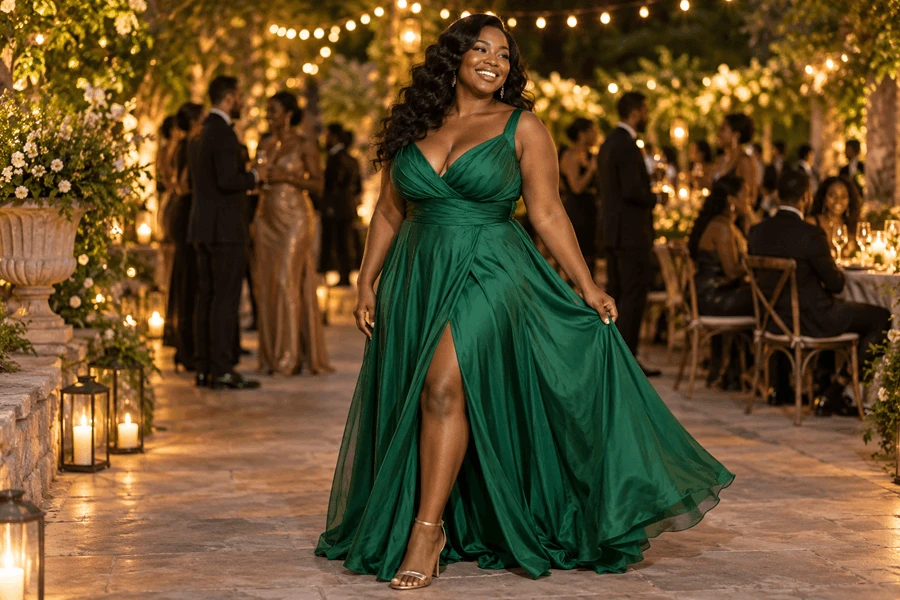
Find occasion looks that feel as good as they photograph, and leave room to enjoy the celebration.
The invitation arrives with a date, a place, and perhaps a dress code that sounds clearer than it feels. You are pleased to be included. Then the familiar questions begin: What will everyone wear? Do I already have something suitable? Will the outfit I imagined still feel right after the journey, the meal, and several hours on my feet?
Occasion dressing can be a pleasure, but it can also gather unnecessary pressure around a moment that was meant to be joyful. A wedding, anniversary, graduation, birthday, or evening out becomes another event for which you feel you must improve yourself before arriving. Somewhere in the search for the right dress, your own comfort can slip to the bottom of the list.
It deserves a place near the top. You are attending as a person who wants to greet people, eat, sit, laugh, perhaps dance, and remember what happened. A beautiful outfit should accompany that experience. With a little planning, you can choose something that respects the occasion and still feels like it belongs to you.
Understand what you have been invited to do
Read the invitation carefully and look for practical details. An outdoor afternoon gathering differs from an evening event in a formal venue. A religious ceremony may have expectations that deserve advance clarification. A celebration with substantial walking or standing calls for different decisions from a seated dinner.
If the dress code is unclear, ask the host or organizer a specific, courteous question. You might ask about formality, terrain, or any requested colors. This is often easier than interpreting a phrase through dozens of conflicting online opinions. The person planning the event can tell you what matters for that particular gathering.
Respect explicit requests when you can, and communicate early if something creates a genuine difficulty. Cultural and religious customs vary, so avoid assuming that one event's expectations apply to every community. Curiosity and consideration will take you further than treating an unfamiliar tradition as a costume theme.
Once you have the necessary information, let it narrow the choices. The purpose is to find a suitable outfit, not to continue researching until every possible uncertainty has disappeared. A clear understanding of the occasion makes room for your own taste within its boundaries.
Begin with a shape you trust
When the event already carries emotion or logistics, a familiar silhouette can be reassuring. You may know that you enjoy a fluid dress, a tailored jumpsuit, or a skirt with a softly structured top. Starting there does not make the outfit uncreative. It gives you a reliable foundation for a new fabric, color, or detail.
A dress is only one option. Depending on the setting, elegant separates or a suit may feel more natural to you. Choose the form that supports your desired appearance and movement. There is no reason to spend the evening wishing you had dressed like yourself simply because one type of garment is commonly associated with celebration.
Try the outfit with the layers and undergarments you intend to wear. Check how it behaves while seated and while reaching for something. Notice any fastening that is difficult to manage alone. A jumpsuit, for example, may require more thought about bathroom breaks than it does on a hanger.
The body wearing the outfit is not a problem to conceal before you can enjoy the occasion. Fit should help you move and feel comfortable. If a garment only seems acceptable while you hold your breath or remain motionless, another size or cut may offer a much better evening.
Let beauty have several forms
Some celebrations invite drama: rich color, a graceful sleeve, a flowing skirt, a little shine. Others suit quieter choices. You can enjoy either without turning it into a statement about whether you are confident enough. A woman in a simple dress may feel completely at ease; another may feel most herself in a bold, expressive look.
A scholarly review by Kim Johnson, Sharron J. Lennon, and Nancy Rudd, Dress, Body and Self (https://experts.umn.edu/en/publications/dress-body-and-self-research-in-the-social-psychology-of-dress/), examines research on dress, perceptions, behavior, and the relationship between clothing and the self. It supports taking dress seriously as a social subject, while leaving no basis for one universally correct outfit.
Your own choice may include family memory. You might wear earrings from your mother, a fabric that reminds you of home, or a color associated with a happy occasion. Let those details belong naturally in the outfit. They do not need to be visible to everyone to make the experience more meaningful to you.
You can also choose something simply because it is beautiful. Not every garment needs to carry a lesson or a history. Sometimes the pleasure is the movement of the skirt when you walk, the feel of the fabric, or the way a shade catches the evening light.
Plan for the hours after the photograph
Shoes deserve a realistic test. Walk in them indoors, stand for a while, and notice whether they remain comfortable. Consider the surface at the venue: grass, uneven paving, stairs, or a dance floor. A shoe that works for a short arrival may not serve the whole event, and a lower heel or flat can be an elegant choice.
Think about temperature. A wrap, jacket, or other layer should work with the outfit rather than appear as an afterthought you dislike wearing. Try it on in advance. If the event moves between outdoors and air conditioning, you may spend more time in the layer than you expect.
Choose a bag that holds what you actually need. A tiny clutch may be charming until it cannot accommodate your glasses or essentials. If you need both hands free, a secure strap may be useful. Practical decisions can help you enjoy the outfit instead of managing it throughout the evening.
Consider fabric behavior as well. Does the garment wrinkle easily during a long drive? Does it need special handling? Is it sheer under strong light? None of these qualities automatically makes an item unsuitable, but knowing about them before the event gives you time to decide whether you want the extra attention they require.
Make the budget fit the occasion's place in your life
An invitation is not a requirement to purchase an entirely new outfit. Begin by checking what you own, including pieces you have worn to other events. Changing the accessories or layer may be enough to make a familiar look feel right for a different setting. Repeating a successful outfit can be a pleasure.
If you need something new, consider its full cost, including alterations, cleaning, and any additional pieces required to wear it comfortably. Decide what you want to spend before becoming attached to a particular option. A lovely evening should not leave you regretting an expense you knew would be difficult.
Borrowing can work when the fit, timing, and expectations are clear. Discuss care and return arrangements rather than assuming affection will handle the practical details. Renting may also suit some needs, but check all terms and allow time for fit problems. The useful option is the one that reduces difficulty for this event.
A special purchase does not have to promise endless versatility. You may choose a garment because it marks a meaningful occasion and because you can comfortably afford that pleasure. Be honest about the reason. You do not need to invent future events to justify a choice that already makes sense on its own terms.
Give yourself a calm rehearsal
A few days before the event, put the complete outfit together. Check fastenings, hems, shoes, jewelry, and the bag. Arrange any repair or alteration with enough time to see the result. Keep the necessary pieces in one place so the day does not begin with a search for an earring or a missing belt.
If you want a photograph to assess the look, take one in ordinary light. Use it to notice practical details, not to inspect your body with increasing severity. Camera angles and lighting affect images. A photograph is one view of an outfit, not the final authority on whether you deserve to feel beautiful in it.
Allow enough time to get ready without turning preparation into an all-day performance. Choose the grooming routine that suits you and the occasion. There is room for simplicity. An outfit can be finished without every possible service, product, or extra step that a celebratory image might suggest.
Leave room to be present
Once you arrive, let the outfit become part of the background. Greet the person you came to celebrate. Notice the music, the room, the food, and the faces you have not seen in a while. You have already made the clothing decisions; you do not have to keep remaking them through every reflective surface.
If something minor goes wrong, it does not have to define the event. A crease, a misplaced strand, or an imperfect photograph belongs to ordinary life. Make a practical adjustment if needed, then return to the people around you. The evening contains more than the evidence of how you looked.
Later, when you remember the occasion, the outfit may become attached to a laugh, a conversation, or a dance you were glad you did not miss. That is a beautiful outcome for clothes: they were comfortable enough to let you participate and expressive enough to feel like yours. You showed up, and you were there for the life happening around you.
© 2026 TopBlackBeauty.com

As a passionate news reporter, I am fueled by an insatiable curiosity and an unwavering commitment to truth. With a keen eye for detail and a relentless pursuit of stories, I strive to deliver timely and accurate information that empowers and engages readers.
Comments (0)