
Small Details. Unforgettable Style.
Let jewelry, scarves, and bags bring your outfit together in a way that feels personal. Sometimes the detail you remember is the smallest thing in the room. A woman turns her head and an earring catches the light. A scarf introduces an unexpected color into an otherwise quiet outfit. A familiar ring rests against the handle of a cup. These objects do not explain the whole person, but they can make an appearance feel particular, considered, and alive.
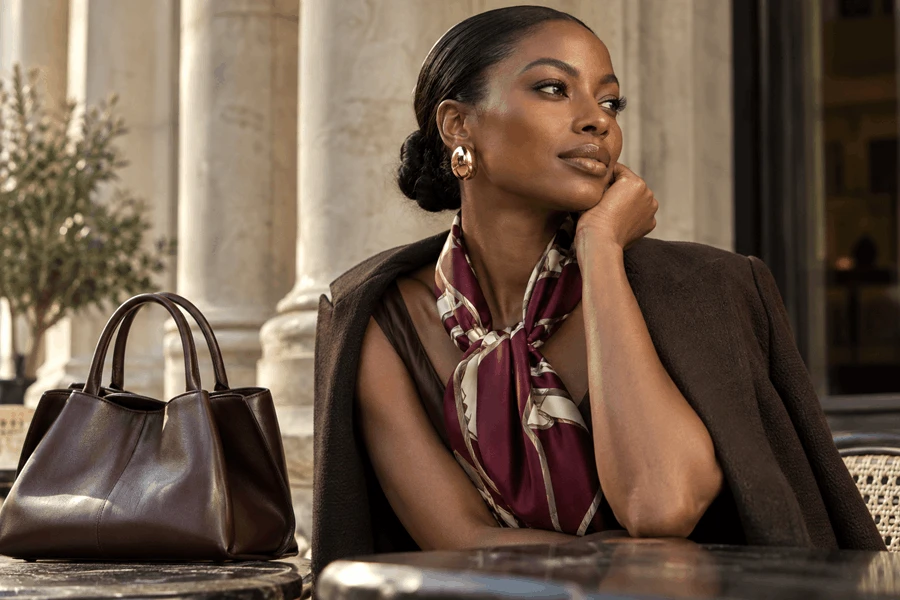
Let jewelry, scarves, and bags bring your outfit together in a way that feels personal.
Sometimes the detail you remember is the smallest thing in the room. A woman turns her head and an earring catches the light. A scarf introduces an unexpected color into an otherwise quiet outfit. A familiar ring rests against the handle of a cup. These objects do not explain the whole person, but they can make an appearance feel particular, considered, and alive.
Accessories offer a generous kind of possibility because they can change the feeling of clothes you already know. You may wear the same shirt and trousers several times and enjoy a different arrangement each time. The change can be modest: another earring, a softer bag, a scarf worn loosely instead of tied close. Personal style often lives in these decisions that are too small to require a new wardrobe.
There is no obligation to wear many accessories. Some women feel most themselves with one familiar piece; others enjoy a rich mixture. The pleasure comes from choosing rather than from reaching a prescribed level of decoration. You can build an outfit around a treasured object or decide that the clothes already provide everything you want.
Notice what the detail changes
Begin with an outfit you wear comfortably. Add one accessory and look at the whole arrangement. Does it bring attention toward your face? Does it repeat a color? Does it make the outfit feel more formal, relaxed, playful, or familiar? These observations can help you understand your taste without needing to memorize a set of styling rules.
Try removing the item again. Sometimes the difference tells you that the accessory adds exactly what you wanted; sometimes the outfit feels better without it. Neither result is a failure. A well-chosen absence can be as deliberate as a well-chosen addition. You are deciding how you want the outfit to feel, not filling every available space.
Scale can change the effect. A small pendant may disappear against a busy print, while a larger shape remains visible. A fine scarf may sit easily under a jacket; a heavier one may alter the whole silhouette. Experiment with what you own before assuming that an accessory is wrong for you simply because it did not work in one combination.
Objects can carry more than decoration
Fashion scholar Monica L. Miller's Slaves to Fashion: Black Dandyism and the Styling of Black Diasporic Identity (https://www.dukeupress.edu/slaves-to-fashion) examines the cultural history of Black dandyism and the ways clothing, gesture, and wit have helped negotiate identity. The book's particular historical focus should not be flattened into a rule about all Black women's style, but it invites serious attention to the meanings dress can carry.
In your own life, meaning may be intimate. A bracelet might remind you of a relative, a pair of earrings of a trip, or a scarf of a woman whose taste you admired as a child. You may wear the object because of that connection even when it is not the newest or most expensive thing you own.
You can also enjoy an accessory without a story attached. Beauty is enough of a reason to like something. There is no need to invent cultural significance for every pattern or turn every purchase into an heirloom. Let the meaning be as simple or layered as it actually is.
When a piece does have a specific cultural origin, learn its name and context from reliable sources or knowledgeable makers. Avoid treating distinct traditions as interchangeable decoration. Curiosity can deepen enjoyment and help you give accurate credit when someone asks about what you are wearing.
Choose earrings for the day, not only the photograph
Earrings can frame the face and change the mood of a simple outfit quickly. Consider how they feel as well as how they look. Weight, fastening, movement, and contact with hair or clothing may matter over several hours. A pair that is lovely for a brief appearance may be less useful for a long workday.
Try them with the hairstyle and neckline you expect to wear. An earring may catch on a high collar or become hidden by a particular arrangement of hair. That does not mean you need to change your hair to serve the jewelry. You can choose another piece or enjoy a subtler effect.
If you know certain materials irritate your skin, take that experience seriously and check the product information. Do not assume a color or price tells you the metal composition. When a piece causes persistent irritation, stop wearing it and seek appropriate advice if needed. An accessory should not demand discomfort as proof of commitment to the look.
For a small collection, think in terms of uses: a comfortable everyday pair, something that adds a little more presence, and perhaps a piece you wear for particular occasions. These are suggestions rather than a required inventory. Your favorite pair may handle several roles beautifully.
Let a scarf do one clear thing
A scarf can introduce color near the face, soften a jacket, or connect shades already present in an outfit. Start with a simple fold or loose knot rather than an arrangement that requires repeated correction. Notice where the ends fall and whether the fabric sits comfortably when you move.
If the scarf has several colors, choose one to repeat elsewhere. A small burgundy detail can connect to a bag; a cream background can relate to a shirt. The repetition does not need to be exact. The aim is a visual conversation among the pieces, not a demand that every shade match perfectly.
Scarves can also be worn on a bag or as a hair accessory when their size and fabric suit the purpose. Take care with valuable or delicate pieces that may snag, stain, or be exposed to weather. A beautiful object is more enjoyable when you understand how you intend to use and maintain it.
You may find one method you return to often. That familiarity can become part of your style. There is no requirement to demonstrate every possible way of tying a scarf before you have earned the right to wear one with pleasure.
A bag should carry your real life
An attractive bag becomes much less attractive if it cannot hold what you need or makes ordinary movement awkward. Before choosing one, consider the contents of a typical day. Do you carry a book, glasses, medication, a water bottle, work equipment, or little more than your essentials? Capacity should follow use rather than an idealized photograph.
Think about the strap, closure, and weight when the bag is filled. Can you open it easily? Does it stay where you want it? Are important items accessible without emptying everything onto a counter? A bag that works well can become a dependable part of your outfit precisely because you stop struggling with it.
Color does not have to be limited to black. A deep brown, navy, olive, or burgundy may connect easily with your clothes, while a stronger shade can provide a deliberate accent. Look at the coats and shoes you wear most often before choosing. The best option is the one that works with your actual wardrobe and makes you happy to pick it up.
A visible logo is a preference, not a requirement for elegance. Shape, material, condition, proportion, and the way you carry the bag all contribute to its effect. You can appreciate design without making brand recognition the measure of whether an outfit has succeeded.
Mix with intention and room for play
If you enjoy several accessories at once, look for a relationship among them. Repeated shapes, related colors, or a similar level of formality can create continuity. You might combine different metals because you like the contrast, or keep the metals similar while varying texture. There is no universal prohibition that should override your own eye.
Give the outfit a clear point of interest if it begins to feel busy. Perhaps the earrings lead while the necklace stays simple, or the patterned scarf provides enough detail near the face. This is a useful editing option, not a rule that forbids abundance. Some outfits are meant to be richly layered.
Photograph a few arrangements to compare them. A picture can help you see the balance from a little distance, but do not let the camera replace your comfort. The version that looks most dramatic in a still image may not be the one you enjoy wearing for a full evening.
Keep the pieces available to wear
Storage affects how often accessories become part of an outfit. Tangled necklaces and missing earring backs can make familiar pieces feel inconvenient. Arrange them so you can find what you use, protect delicate surfaces, and keep pairs together. A simple divided box may be enough.
Care depends on the material and construction. Follow reliable maker instructions where available, especially for plated metals, pearls, stones, delicate fabrics, or leather finishes. Avoid using one aggressive cleaning method on every object. If a treasured piece needs repair, ask someone qualified before attempting a fix that could make the problem worse.
Review the collection occasionally. There may be a piece you have forgotten, one that needs a small repair, or something you no longer enjoy. You can keep a sentimental object without asking it to serve as everyday jewelry. Giving it a separate place can protect both the memory and the usefulness of your daily choices.
Wear the detail into an ordinary day
It can be tempting to reserve everything beautiful for an occasion important enough to justify it. Yet a favorite accessory may bring pleasure to an ordinary lunch, a visit with a friend, or a quiet afternoon outside. Use your judgment about practicality and value, but allow some of the things you love to participate in your actual life.
You may discover that a small detail becomes familiar to the people who know you: the earrings you reach for, the scarf you tie almost without looking, the ring you turn while listening. That recognition is part of personal style's intimacy. It grows through repetition and use rather than constant novelty.
The final arrangement need not be unforgettable to everyone who sees it. It is enough that it feels considered to you. You put on the piece, notice the little change it makes, and step into your day with something you chose because it pleased you. Sometimes that is the detail worth remembering.
© 2026 TopBlackBeauty.com

As a passionate news reporter, I am fueled by an insatiable curiosity and an unwavering commitment to truth. With a keen eye for detail and a relentless pursuit of stories, I strive to deliver timely and accurate information that empowers and engages readers.
Comments (0)