
The Family Stories Worth Passing Down
How to preserve a voice, a memory, and the small details that make a family history feel alive. A voice note can hold something a photograph cannot: the pause before a name, the laugh that interrupts a sentence, the way someone says “you remember” even when you were not born yet. Long after the details become familiar, those sounds can make a person feel close again.
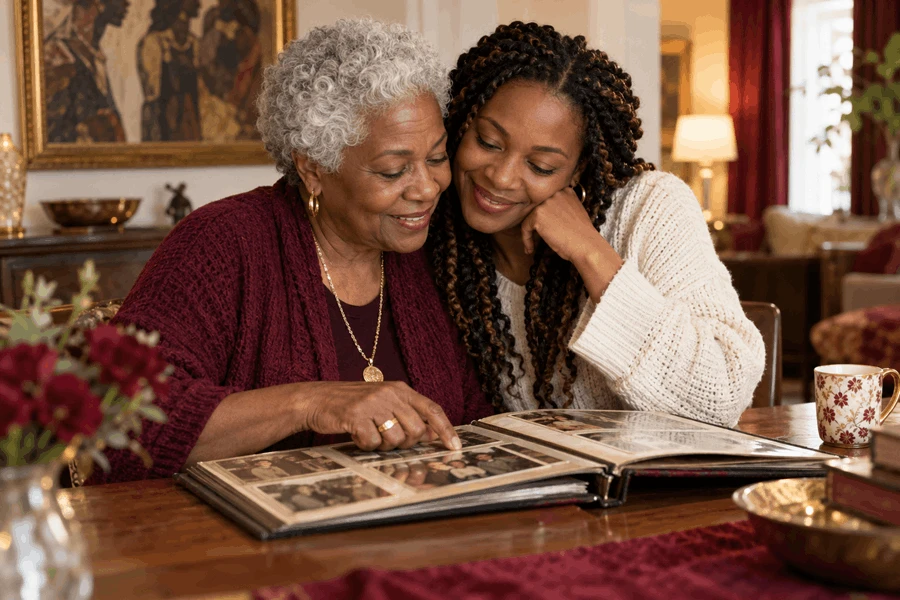
How to preserve a voice, a memory, and the small details that make a family history feel alive.
A voice note can hold something a photograph cannot: the pause before a name, the laugh that interrupts a sentence, the way someone says “you remember” even when you were not born yet. Long after the details become familiar, those sounds can make a person feel close again.
You do not need to wait for a reunion, a milestone birthday, or a perfectly organized archive to begin saving family stories. You can begin with one willing person and one good question. The project may be modest enough to finish in an afternoon and meaningful enough to be listened to for years.
The challenge is often deciding what counts. Families tend to preserve the major departures and accomplishments, while the details of ordinary life disappear. Yet the everyday material can be the most revealing: where people bought food, how they met friends, what they wore to a first dance, what a room sounded like before everyone went to sleep.
Start with someone, not with everything
Choose one person whose experiences you want to understand better. Ask whether she would enjoy sharing a memory, and offer a manageable amount of time. A small invitation can feel more welcoming than announcing that you intend to record her entire life.
Tell her why you are interested. You might want to know about the neighborhood where she grew up or the grandmother you never met. Giving the conversation a starting point can help both of you relax. She may also have a subject she would rather discuss, and that choice belongs in the plan.
Do not assume the oldest person is the only person with history. A younger relative may remember a recent migration, a school experience, or a community event that others understand only from a distance. Every generation holds material that will become harder to recover if nobody thinks to ask.
Explain what will happen to the recording
Before recording, agree on who may hear it and whether anything may be shared publicly. The Oral History Association’s guidance emphasizes informed consent, clear expectations, and respect for a narrator’s choices about participation and access. These principles are useful even for a small family project. Oral History Association, Oral History Best Practices (https://oralhistory.org/best-practices/)
Avoid treating a person’s willingness to talk as permission to post the conversation online. A private family recording and a public video are different invitations. If plans change later, ask again. Trust is part of the value of what you are preserving.
Make it easy to pause, skip a question, or end the session. A recording should not become an obligation to reveal something painful. You can preserve a wonderful account of someone’s life without demanding access to every room inside it.
Ask questions that open a scene
“What was your childhood like?” is a reasonable question, but it can be difficult to answer. Try a smaller doorway: what could you see from the front step? Who woke up first? What did you do after school? What did your mother call you when she was pleased?
Follow a detail that interests the speaker. If she mentions a shop, ask what it sold and who worked there. If she remembers a song, ask when she heard it. The purpose is to help a memory become specific, not to force every conversation back onto a prepared list.
Leave a little silence. People may need time to find a name or decide how to explain something. Filling every pause with another question can interrupt the part of the story that is still arriving. A patient listener gives the speaker room to choose her own pace.
Remember pleasure as carefully as hardship
Ask what made her laugh. Ask who was stylish, who loved to dance, who told stories badly but insisted on telling them anyway. Ask about the first thing she bought just because she wanted it. These details can restore dimensions of a life that duty and family roles have obscured.
For Black women, family remembrance can too easily become a record of endurance alone. Strength matters, but so do taste, curiosity, flirtation, humor, creativity, and the private satisfactions of an ordinary day. A woman deserves to be remembered for the things she enjoyed as well as the things she survived.
You may discover an unexpected similarity. A grandmother who seems cautious now may have once taken an adventurous journey. An aunt who rarely speaks about herself may remember a friendship with extraordinary warmth. Let surprise alter your understanding rather than fitting every answer into the person you thought you already knew.
Use objects as invitations
A recipe card, a piece of jewelry, a work badge, or an old photograph can give the conversation somewhere to begin. Ask where it came from and why it was kept. The answer may concern the object itself, or it may lead to a person whose importance you had not understood.
Photograph the object if the owner agrees, and record its connection to the conversation. Include identifying details while they are available. A beautiful image with no name or explanation may become mysterious much sooner than you expect.
Handle fragile originals carefully and avoid experimenting with cleaning or repair. If an item seems historically significant or damaged, a qualified archivist or conservator can advise. A family keepsake does not need to be made visually perfect to remain valuable. Its wear may be part of the story, even when it needs protection.
Preserve the difference between memory and certainty
If someone is unsure about a date, record the uncertainty. Do not quietly choose a year because it would make the account look complete. You can later compare the memory with letters, photographs, records, or another person’s recollection, while keeping track of where each piece of information came from.
Campt’s scholarship on Black photographic archives encourages close attention to images that have been overlooked or interpreted too narrowly. Applied cautiously to family work, that attentiveness means looking beyond a quick caption and asking what context is still missing. Tina M. Campt, Listening to Images, 2017 (https://www.dukeupress.edu/listening-to-images)
If relatives disagree, keep the accounts clearly attributed. A family archive can hold more than one recollection. You are not required to settle every question during a conversation whose first purpose is to listen. The distinction between what happened and how it is remembered can itself become part of the history.
Keep the voice recognizable
When making a written transcript, avoid polishing the speaker into someone else. You can improve readability while preserving the meaning, rhythm, and language that make the account hers. If you are uncertain about a word, mark it for review rather than replacing it with a confident guess.
This matters especially when a conversation moves between languages or includes expressions without a neat equivalent in English. Ask the speaker how she would explain the phrase. You might preserve the original wording and add an explanation alongside it, allowing future listeners to hear both the sound and the sense.
A transcript is a helpful companion to a recording, but it need not replace it. The speaker’s emphasis may carry meaning that punctuation cannot fully capture. Keep the original recording when possible, and make clear when a written version has been edited or translated.
Give the files names a person can understand
Imagine opening the folder five years from now. “Audio 0047” will tell you very little. A name that includes the speaker, a date, and a brief subject will be easier to recognize. Add a short note about the occasion and any sharing restrictions you agreed on.
For example, a family might label a private file with the speaker’s preferred name, the recording date, and “childhood kitchen memories.” The exact format matters less than consistency. Use enough detail to understand the material without exposing information the speaker wanted kept private.
Keep a second copy in a separate place, and check occasionally that the files still open. Technology changes, devices fail, and the person who understands the folder may not always be available. Share the basic organization with another trusted family member so the project does not depend entirely on one person’s memory.
Return something to the person who shared
Offer the speaker a copy she can actually use. That may mean a simple audio file, a printed transcript, or a short booklet with photographs. Ask what format she prefers rather than assuming the newest technology will be the most convenient.
If you plan to circulate an edited version, give her a chance to review it. The conversation may feel different when she sees it written down. A name may need correction, an explanation may need context, or a passage may be more private than she first realized.
Thank her specifically. Mention something you learned or a detail you will remember. The exchange should leave the speaker feeling heard, not merely processed into a family project. The relationship is more important than producing a perfect archive on the first attempt.
Begin small enough to begin again
One finished conversation is more useful than a grand plan that remains on your phone. Set a modest goal: one recording, one labeled photograph, one page of notes. Let the project grow from work you have actually completed.
You may eventually invite several relatives to contribute. Give them a simple method and room to choose their subjects. One person may write; another may send audio; another may identify photographs. A family history can be collaborative without requiring everyone to enjoy the same kind of work.
And if some stories are unavailable, acknowledge the loss without treating the whole project as empty. Record what you know and who told you. Preserve your own memories too. The fact that you arrived late to one question does not mean there is nothing left worth asking.
Years from now, the most treasured moment may be a sentence you nearly overlooked: a description of a favorite dress, the name of a friend, a laugh at a forgotten joke. Give those moments somewhere to stay. Charge the phone, choose a quiet place, and ask the person beside you to tell you about a day she still remembers. Then let her speak.
© 2026 TopBlackBeauty.com

As a passionate news reporter, I am fueled by an insatiable curiosity and an unwavering commitment to truth. With a keen eye for detail and a relentless pursuit of stories, I strive to deliver timely and accurate information that empowers and engages readers.

Comments (0)