
Celebrate Where We Come From. Imagine Where We Go Next.
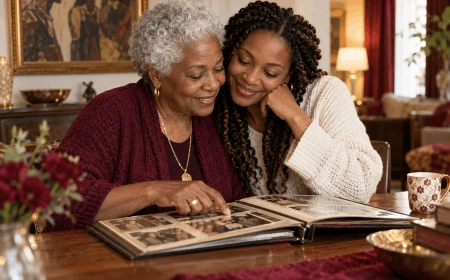
Heritage can offer a place to stand while we make something generous, beautiful, and new. At a good gathering, time seems to overlap. An older woman hears a song and remembers a dance floor the younger people have never seen. A child discovers a dish that someone else has been making for decades. Friends recognize a familiar expression in a new face. For a moment, the past is present through ordinary things: a sound, a taste, a gesture, a name spoken with affection.

Heritage can offer a place to stand while we make something generous, beautiful, and new.
At a good gathering, time seems to overlap. An older woman hears a song and remembers a dance floor the younger people have never seen. A child discovers a dish that someone else has been making for decades. Friends recognize a familiar expression in a new face. For a moment, the past is present through ordinary things: a sound, a taste, a gesture, a name spoken with affection.
These moments can make heritage feel close enough to touch. They remind us that culture lives through people, including people who may never appear in a textbook or receive an award. It lives in what they make, what they remember, what they refuse to forget, and what they choose to teach. It also lives in the changes they make when an old form no longer fits the life around it.
For Black women, thinking about the future can involve holding several feelings at once. There may be pride in what earlier generations created, grief about what they endured, frustration with what remains unfinished, and a desire for more ease than they were allowed. None of these feelings has to cancel the others. A meaningful relationship with the past can hold gratitude and honest questions in the same conversation.
Celebrate with names and particulars
Broad praise can feel good, but specifics give admiration somewhere to land. Learn the name of the artist whose work you love. Find out who wrote the song, who arranged it, and who helped bring it to an audience. Ask the relative who made a treasured object how she learned the skill. Attention becomes richer when it moves beyond a general feeling of appreciation.
This matters especially when creative work circulates without its maker. An image may travel through many accounts while the artist’s name disappears. A saying may be repeated with an incorrect attribution until the error begins to look authoritative. Before passing something along, take a little time to find its source. If you cannot confirm the credit, avoid turning uncertainty into certainty.
The pleasure of discovery is worth that effort. A painting can lead you to an artist’s other work. A song can lead you to a recording, a collaborator, or a musical tradition you want to understand more closely. Culture becomes an invitation to keep learning rather than a collection of familiar references you are expected to recognize immediately.
A useful example is Alma Thomas, whose Smithsonian American Art Museum biography (https://americanart.si.edu/artist/alma-thomas-4778) describes a career that included teaching and a later flourishing of abstract painting. Her life offers more to explore than a simple message about age. There is work to look at, color to consider, and an artistic practice deserving sustained attention.
Let remembrance include honest questions
Honoring the past does not require making every part of it admirable. Families and communities contain tenderness alongside exclusions, silences, and unequal expectations. You may treasure an elder’s generosity while questioning the demands placed on the women around her. You may love a familiar custom while recognizing that somebody was never allowed to participate comfortably.
Ask questions with care and a willingness to hear answers that complicate your assumptions. Who did the work? Who made the decisions? Who had to leave, and who had the choice to stay? What did people believe was possible at the time? Such questions can deepen understanding without turning every conversation into a verdict.
Historical context matters, but it should not erase the people who were hurt. You can understand why a practice developed and still decide not to continue it. You can acknowledge someone’s limitations while valuing what she gave you. A mature relationship with inheritance allows discernment, including the freedom to carry some things forward and leave others behind.
Scholar Christina Sharpe’s In the Wake: On Blackness and Being (https://www.dukeupress.edu/in-the-wake) considers Black life in relation to slavery’s continuing aftermath and to forms of representation and possibility. It is a reminder that history does not sit neatly outside the present. Looking forward can require careful attention to what continues to shape the conditions of everyday life.
Give the future a practical place in your calendar
Imagining a richer cultural life is easier when the next step is small enough to take. Choose one activity you can actually sustain: a monthly library visit, an occasional local performance, a shared reading evening, or time to document family photographs. The purpose is participation, not assembling an impressive schedule that becomes another source of pressure.
Start with access. What is available near you, online, or through people you already know? Libraries, community centers, schools, independent venues, and local artists may offer entry points. Check the actual details before making plans, including cost, transport, opening times, and accessibility. A beautiful idea becomes more welcoming when the practical arrangements work.
If you organize something, define it clearly. A reading circle might discuss one short piece rather than require everyone to finish a long book. A family history afternoon might focus on labeling ten photographs. A creative gathering might give people time to make something without expecting a polished result. A manageable invitation often makes it easier for people to say yes honestly.
You can also plan for continuity. Decide who will send the next message, where shared materials will be kept, and whether the group wants to meet again. Small structures prevent an enjoyable event from depending entirely on one woman’s memory and unpaid effort. They also give other people an opportunity to become responsible participants.
Support the people making culture now
Admiration is valuable, and artists also need practical support. When you can afford it, buy a book, purchase a ticket, commission work, or pay the requested fee. If money is limited, thoughtful recommendations, library requests, and accurate credit can still help people encounter the work. Be clear about what you can offer without promising resources you do not have.
Respect boundaries around creative labor. An artist may enjoy discussing her process without being available to produce free work for every occasion. A writer may need time to research and revise. A musician’s performance includes preparation that the audience never sees. Treating these contributions as work allows appreciation to become more than a compliment.
When inviting someone to participate in an event, explain the audience, purpose, time commitment, and payment at the beginning. Avoid asking a creator to accept vague exposure in place of terms she can evaluate. If the budget is small, say so and adjust the request. Fairness can include a smaller project rather than an ambitious one built on hidden sacrifice.
Remember the people working outside the most visible institutions. A local storyteller, a skilled maker, a teacher, or the organizer of a neighborhood event may be contributing to cultural life in a way that is easy to overlook. Look closely enough to recognize the work before deciding where influence resides.
Make room for the women coming after you
A younger woman may not express her relationship with heritage in the way you expect. Her references may be different. She may combine influences you would have kept separate. She may question a custom you once accepted without hesitation. Curiosity gives the relationship somewhere to go before disagreement becomes the whole story.
Ask what interests her and listen to the answer without immediately correcting her taste. Share what matters to you with context rather than a demand for loyalty. Play the song, explain the photograph, tell the story behind the object. Then leave room for her response. An inheritance offered with warmth has a different quality from one presented as a test.
Practical encouragement can be memorable. Read her work attentively. Help her find a useful resource. Introduce her to someone who can answer a question, with both people’s permission. Attend a small event when you are able. You do not have to predict a brilliant career to take a young person’s effort seriously.
The exchange can move both ways. Younger people may teach you a new form, introduce an unfamiliar artist, or help make an old collection accessible. Let yourself be a learner. Authority does not have to disappear when knowledge is shared, and affection can grow through the pleasure of discovering something together.
Include your own unfinished possibilities
It is generous to support the next generation, but your creative life does not have to become entirely about theirs. You may still want to learn an instrument, write a family essay, study a language, join a choir, or return to a practice you abandoned when other responsibilities became urgent. Those wishes deserve attention at whatever age they find you.
Begin at a scale your life can hold. Give yourself an hour, a class, a notebook, or a conversation with someone who knows more. Being a beginner can feel exposing, especially if you are accustomed to being the dependable person who already knows what to do. You can allow yourself to be uncertain without treating that uncertainty as evidence that you began too late.
There is pleasure in doing something without needing it to become a business or a public achievement. A poem can belong to your own collection. A painting can live in your home. A song can be learned for the satisfaction of singing it. Cultural participation includes the intimate work that makes a person’s ordinary days more expressive.
If you do want to share your work widely, take that wish seriously as well. Learn the practical requirements, seek useful feedback, and make a realistic plan. Ambition and enjoyment can coexist. You do not need to pretend you have no hopes in order to protect yourself from the vulnerability of trying.
Build a celebration you can belong to
Imagine a gathering where the person who cooked has time to eat, the child is allowed to ask questions, the elder is heard without being expected to perform wisdom, and the shy guest can participate without being pushed into the center. Imagine that the music includes discoveries as well as favorites, and that people leave with names they want to look up and stories they want to remember.
No gathering will achieve every ideal. People will arrive late, disagree, forget something, or need to leave early. Still, the choices you make can bring the occasion closer to the welcome you intend. Culture is shaped through those choices as surely as it is through the more visible works we admire.
We can celebrate where we come from with clear eyes and affectionate attention. We can ask more of the future without dismissing the people who helped us reach the present. And we can make room for a life that includes beauty, rest, curiosity, and unfinished possibility. The next chapter will be made through actual people’s decisions. Yours belong among them.
© 2026 TopBlackBeauty.com

As a passionate news reporter, I am fueled by an insatiable curiosity and an unwavering commitment to truth. With a keen eye for detail and a relentless pursuit of stories, I strive to deliver timely and accurate information that empowers and engages readers.
Comments (0)