
The Melanin Matrix: A Dermatologist-Informed Skincare Routine for a Glow That Lasts
Discover a simple skincare routine designed to support healthy, radiant, and long-lasting glowing skin. Learn practical beauty habits and skincare tips for a fresh, luminous complexion.

Radiant skin isn’t about changing your complexion. It’s about helping healthy, well-hydrated, protected skin look its most luminous.
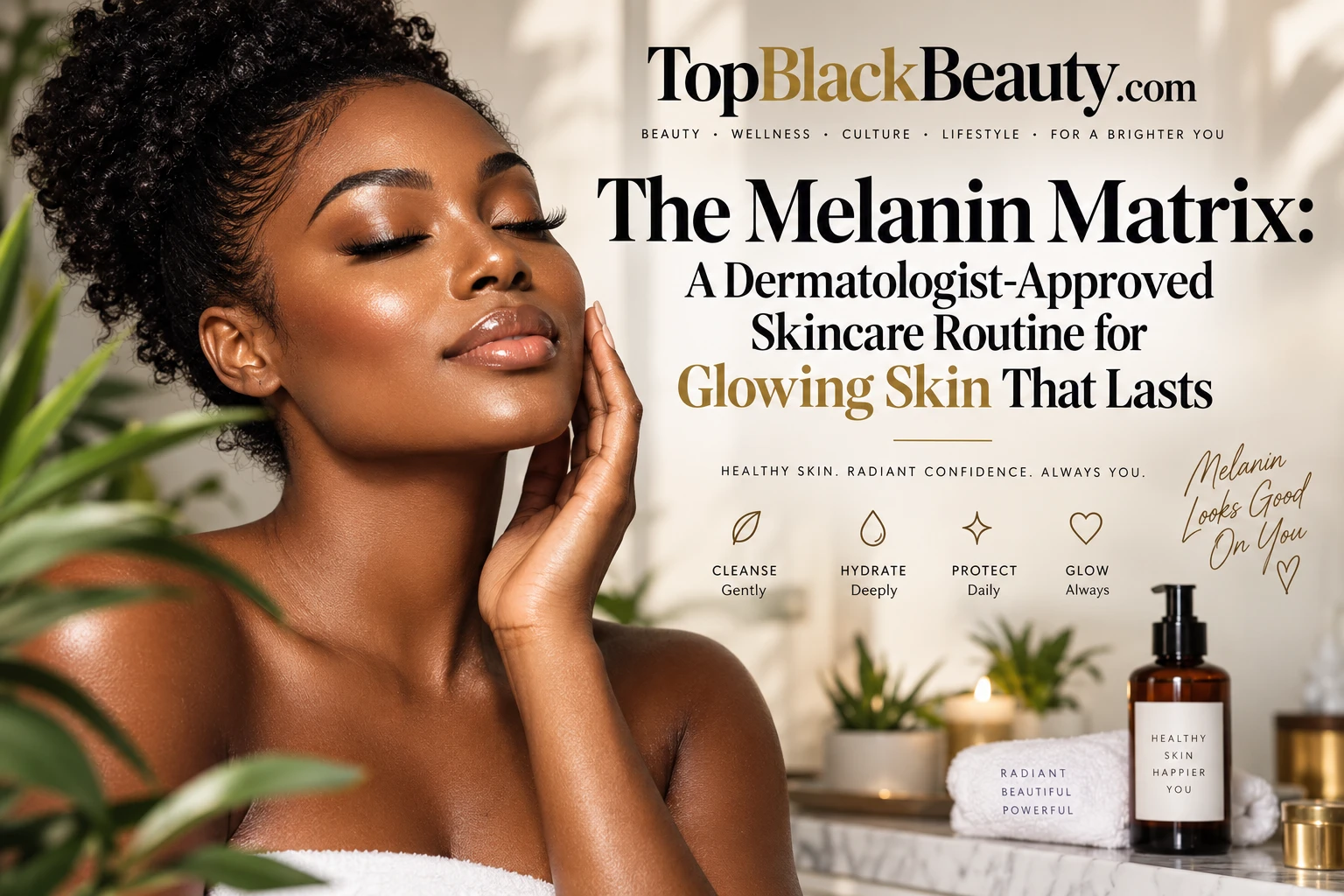
Melanin is one of the skin’s remarkable natural defenses. It contributes to the beautiful range of tones found in Black and brown skin and provides some natural protection against ultraviolet radiation—but it does not make skin immune to sun damage.
Melanin-rich skin also deserves thoughtful care for another reason: inflammation from acne, irritation, picking, harsh products, or certain procedures can leave behind post-inflammatory hyperpigmentation (PIH)—dark marks that may linger long after the original irritation disappears.
That changes the goal of a good skincare routine.
You don’t need to attack your skin to make it glow. You need to protect the barrier, control inflammation, support hydration, address discoloration carefully, and protect your progress from the sun.
Here is a simple, science-informed routine for building radiance that lasts.
Your Morning Glow Routine: Protect, Brighten & Hydrate
Morning skincare should prepare your skin for what it will encounter throughout the day: sunlight, pollution, dryness, heat, makeup, and other environmental stressors.
Step 1: Start Gently
Choose a mild cleanser that removes excess oil and overnight buildup without leaving your face feeling tight or stripped.
Look for ingredients such as:
- Ceramides
- Glycerin
- Hyaluronic acid
- Other gentle humectants
Fragrance-free products can be especially useful for sensitive or irritation-prone skin.
Glow rule: If cleansing leaves your face feeling painfully tight, squeaky, or irritated, your cleanser may be too aggressive.
Step 2: Add an Antioxidant
Vitamin C can be a valuable addition to a routine designed to improve the appearance of uneven tone.
It functions as an antioxidant and may complement your sun-protection strategy while helping improve the appearance of discoloration over time.
But stronger is not always better.
If you have sensitive skin, introduce vitamin C gradually and stop using a product if it causes persistent burning, redness, itching, or irritation.
Consistency beats intensity.
A product your skin tolerates and you use regularly is more valuable than an expensive formula that constantly irritates your skin.
Step 3: Give Your Skin a Hydration Boost
That soft, supple, light-reflective appearance associated with glowing skin often begins with something surprisingly simple:
hydration.
Hyaluronic acid and glycerin are humectants that help attract and retain water in the skin.
Apply a hydrating serum if you enjoy using one, then follow with moisturizer to help maintain that hydration.
And remember: you don't need a 10-step routine.
A few well-chosen products can outperform an overloaded bathroom shelf when they are used consistently.
Step 4: Sunscreen—The Step You Shouldn't Skip
If dark spots and uneven tone are among your concerns, sunscreen deserves a permanent place in your morning routine.
Yes—even on melanin-rich skin.
Melanin provides some natural UV protection, but it is not a substitute for sunscreen.
Choose a broad-spectrum SPF 30 or higher that you are comfortable applying generously and regularly.
For deeper complexions, tinted or sheer formulas may help minimize the visible white or gray cast associated with some mineral sunscreens.
And sunscreen isn't only about preventing sunburn.
Protecting your skin from ultraviolet radiation can also help prevent existing areas of hyperpigmentation from becoming more noticeable.
Think of sunscreen as protecting everything else you're doing for your skin.
Your Evening Reset: Cleanse, Treat & Restore
Nighttime is your opportunity to remove the day's buildup and use targeted treatments without turning your routine into a chemistry experiment.
Step 1: Remove the Day
If you're wearing makeup or water-resistant sunscreen, consider double cleansing.
Start with an oil cleanser, cleansing balm, or another appropriate makeup remover.
Then follow with your regular gentle cleanser.
The objective is simple: clean skin without aggressive scrubbing.
Your face does not need to feel stripped to be clean.
Step 2: Consider a Retinoid
Retinoids are among dermatology's most established topical ingredients for addressing concerns such as acne, uneven texture, fine lines, and some forms of discoloration.
But they must be treated with respect—particularly when irritation itself can lead to dark marks.
If you're new to an over-the-counter retinol, consider beginning slowly rather than applying it every night immediately.
For example, some people begin a few evenings per week and increase frequency only if their skin tolerates it.
Don't assume that peeling, burning, or severe dryness means a product is “working.”
Irritation is not the price of beautiful skin.
People who are pregnant, trying to become pregnant, breastfeeding, have certain skin conditions, or use prescription treatments should discuss retinoid use with an appropriate healthcare professional.
Step 3: Seal It With Moisture
Finish with a moisturizer appropriate for your skin type.
Ingredients such as ceramides, glycerin, fatty acids, and squalane can help support the skin barrier and reduce moisture loss.
This step becomes particularly important when you're using active ingredients.
A healthy barrier isn't the boring part of skincare.
It's the foundation that makes the rest of your routine possible.
The Melanin Matrix
| ☀️ MORNING | 🌙 EVENING |
|---|---|
| Gentle Cleanser | Remove Makeup/SPF |
| Antioxidant Serum | Gentle Cleanser |
| Hydration | Retinoid or Targeted Treatment |
| Moisturizer | Moisturizer |
| Broad-Spectrum SPF 30+ | Barrier Recovery |
The formula is beautifully simple:
PROTECT → HYDRATE → TREAT → REPAIR → REPEAT
What About Exfoliation?
This is where more is definitely not always better.
Chemical exfoliants such as lactic, glycolic, and salicylic acid can be helpful for particular skin concerns, but excessive exfoliation can damage the skin barrier and increase irritation.
And irritation can contribute to post-inflammatory hyperpigmentation.
You also don't automatically need a weekly peel simply because you want glowing skin.
If you're already using a retinoid or other strong active ingredients, be particularly careful about stacking exfoliating products.
Start conservatively and pay attention to what your skin is telling you.
The goal is renewal—not inflammation.
Dark Spots: Treat the Cause, Not Just the Mark
One of the biggest skincare mistakes is focusing entirely on fading a dark spot while ignoring whatever keeps creating new ones.
If acne is causing your discoloration, controlling the acne matters.
If irritation from a product is creating dark patches, changing the product matters.
If picking at blemishes is contributing to marks, breaking that cycle matters.
Depending on your skin and the cause of discoloration, dermatologists may recommend ingredients such as retinoids, azelaic acid, vitamin C, niacinamide, hydroquinone, or other treatments.
But persistent or worsening pigmentation deserves professional evaluation rather than endless experimentation.
When Your Skin Needs a Dermatologist
Some concerns simply need more than a beauty routine.
Consider seeing a board-certified dermatologist, particularly one experienced in treating skin of color, if you have persistent hyperpigmentation, melasma, painful or severe acne, unexplained skin changes, scarring, or discoloration that isn't improving.
Professional treatments—including certain chemical peels, microneedling, prescription medications, and carefully selected laser procedures—may be appropriate for some patients.
However, procedures aren't interchangeable, and suitability can vary significantly by skin type, condition, medical history, and device.
Professional evaluation matters.
Three Rules for a Glow That Lasts
1. Protect Your Barrier
You don't need to punish your skin into becoming beautiful.
Over-cleansing, excessive exfoliation, constantly switching products, and combining too many active ingredients can create the very inflammation you're trying to eliminate.
Treat your barrier like something worth protecting.
Because it is.
2. Give Your Routine Time
Skincare rarely produces its best results overnight.
Some changes require weeks or months of consistent care.
Instead of chasing a different viral routine every seven days, establish a simple foundation and evaluate how your skin responds.
Take photographs under similar lighting if you want to track progress objectively.
3. Support Your Skin From the Inside, Too
Healthy skin is influenced by more than serums.
Adequate nutrition, hydration, sleep, physical activity, stress management, and appropriate medical care all contribute to overall health.
Water and nutritious foods support normal body function, but no tea, juice, detox drink, or supplement can replace sunscreen or medically appropriate treatment for a skin condition.
The Real Secret to Radiant Melanin
Beautiful skin doesn't require twenty products.
It doesn't require scrubbing until your face burns.
And it certainly doesn't require changing the color that makes you uniquely you.
The strongest routine is often the one you can actually maintain:
Cleanse gently.
Hydrate generously.
Treat thoughtfully.
Protect consistently.
Then give your skin time.
Because the most powerful glow isn't created by fighting your melanin.
It's created by caring for the skin that carries it.
Sources & Further Reading
- American Academy of Dermatology Association — Dermatologist guidance on skin of color, hyperpigmentation, sunscreen, acne and skincare.
- U.S. Food & Drug Administration — Consumer information regarding sunscreen and sun protection.
- American Academy of Dermatology Association — Guidance regarding retinoids, dark spots and post-inflammatory hyperpigmentation.
- Taylor SC, et al. Dermatologic considerations and treatment approaches for skin of color.
- Davis EC, Callender VD. Postinflammatory Hyperpigmentation: A Review of the Epidemiology, Clinical Features, and Treatment Options in Skin of Color. Journal of Clinical and Aesthetic Dermatology.
Medical Disclaimer: This article is provided for educational and informational purposes and is not a substitute for diagnosis or individualized medical advice from a qualified healthcare professional.
© 2026 TopBlackBeauty.com. All Rights Reserved.
Frequently Asked Questions

As a passionate news reporter, I am fueled by an insatiable curiosity and an unwavering commitment to truth. With a keen eye for detail and a relentless pursuit of stories, I strive to deliver timely and accurate information that empowers and engages readers.


Comments (0)