
Traditions We Make Our Own
A tradition can hold the people who came before us and still make room for the people we are becoming. There is usually a moment, somewhere between the invitation and the grocery list, when a familiar celebration begins to feel complicated. You love what the gathering means. You can already hear the laughter, imagine the good plates, and picture somebody arriving with enough food for twice the number of guests. Yet you also know who will spend the evening standing, who will pay more than she can comfortably afford, and who will leave exhausted after making everyone else feel at home.
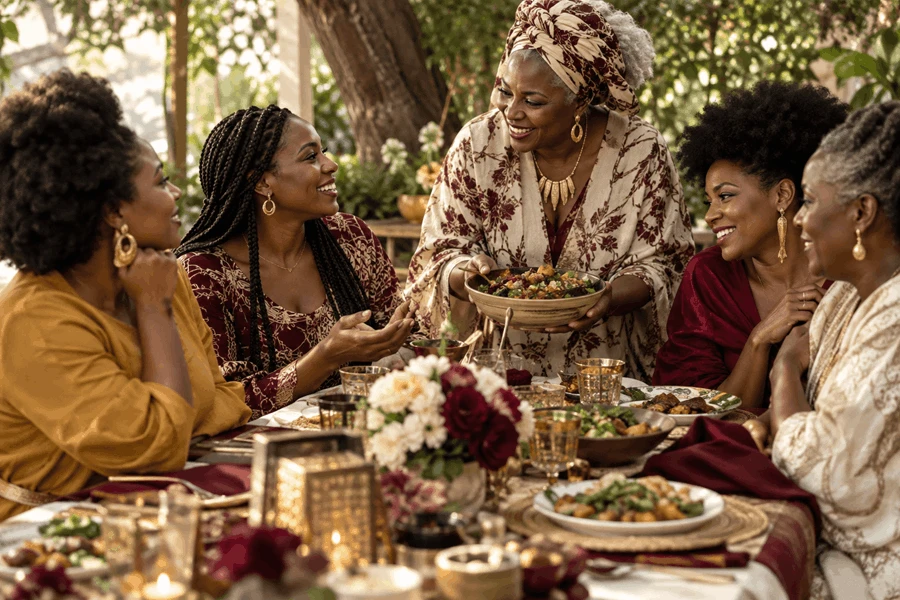
A tradition can hold the people who came before us and still make room for the people we are becoming.
There is usually a moment, somewhere between the invitation and the grocery list, when a familiar celebration begins to feel complicated. You love what the gathering means. You can already hear the laughter, imagine the good plates, and picture somebody arriving with enough food for twice the number of guests. Yet you also know who will spend the evening standing, who will pay more than she can comfortably afford, and who will leave exhausted after making everyone else feel at home.
For many women, affection and responsibility arrive together. We inherit the pleasure of a tradition alongside instructions about how to maintain it. Sometimes those instructions are spoken. Sometimes they live in a raised eyebrow when you suggest a different menu, a shorter visit, or a holiday away. It can feel as though changing one detail means disappointing an entire family history.
But a tradition has never been kept alive by objects alone. Someone has to choose it again. Someone has to find a way for it to fit inside an actual life, with its work schedules, new babies, limited money, changing beliefs, and unexpected losses. That choice deserves thought. You can care deeply about your people without repeating every arrangement they once needed.
Begin with what the tradition gives you
Before deciding what to change, ask what you would miss. The answer may surprise you. Perhaps you would barely notice the elaborate centerpiece, but you would miss hearing your cousins argue affectionately over the same board game. Perhaps the meal matters less than the hour in the kitchen when your mother finally slows down enough to talk. Perhaps the holiday outfit is a pleasure in itself, a small ceremony of taking yourself seriously.
Separate those feelings from the schedule that has grown around them. If the heart of the occasion is conversation, a gathering does not have to last all day. If the heart is generosity, a thoughtful letter may carry more meaning than another expensive gift. If the heart is remembering an elder, you can speak her name at a picnic as sincerely as you can at a formal dinner.
This is a useful question to ask other people, too. Try, “What part of this day means the most to you?” Give everyone time to answer, including the quiet relatives who rarely get to determine the plan. You may discover that the labor everyone considered essential was never the part anybody treasured most. You may also discover a detail you had underestimated and choose to protect it.
Circumstances have always shaped customs
It is tempting to imagine an earlier generation practicing tradition under perfect conditions. More often, people made something beautiful from what was available. A recipe depended on what the store stocked. A celebration happened after a shift ended. Relatives stayed connected across distance with whatever forms of communication they could access. Resourcefulness belongs inside the story of continuity.
Anthropologist Ashanté M. Reese’s Black Food Geographies (https://www.jstor.org/stable/10.5149/9781469651521_reese) examines food access and community life in Washington, D.C., placing everyday choices within larger social and economic conditions. That perspective offers a useful reminder: family practices do not develop outside the material realities of people’s lives.
Your own circumstances deserve the same recognition. A smaller apartment is not a failure of hospitality. A different work schedule is not proof that you care less. A move across an ocean may change the ingredients, language, timing, and people around your table. There can be tenderness in acknowledging what is missing while making a celebration that is possible where you actually are.
For a Black woman whose family spans several places, no single gathering may contain every part of her inheritance. One household may observe a religious holiday another does not. One branch may speak a language she understands better than she speaks. These differences need curiosity, not a test of authenticity. A custom can be particular to your family without becoming a rule for everyone who shares your background.
Make the invisible work visible
A celebration often appears effortless because somebody has worked hard to hide the effort. Before the first guest arrives, there are messages to answer, dietary needs to check, transportation to arrange, surfaces to clear, and decisions nobody else realizes were decisions. Afterward come leftovers, borrowed chairs, washing up, and the quiet work of getting a home back into order.
Write those tasks down before agreeing to host again. A list can change a vague request for “help” into a clear division of responsibility. One person handles invitations and replies. Another brings a complete dish in a serving container. Someone takes responsibility for cleaning the kitchen before leaving. A relative who cannot attend may contribute to groceries if that feels comfortable and genuinely voluntary.
Responsibility should include noticing and following through. The person taking on transportation can contact the passengers directly. The person bringing a dish can check what utensils it needs. Otherwise, the original host remains the manager of every delegated task. A gathering feels different when care moves among people instead of continually arriving at one woman’s feet.
It may take more than one conversation to change an established pattern. Be specific without turning the discussion into a trial of everyone’s character. “I can host six people this year, and I need the kitchen finished before everyone leaves” gives people something concrete to respond to. Your capacity is information the plan needs, even when somebody wishes the information were different.
Allow a new generation to contribute
An inherited ritual becomes more interesting when younger people can add something of their own. Ask a teenager to choose a few songs. Invite a child to design the place cards. Let a younger relative suggest a dish, an outing, or a question for the table. Participation creates a relationship with the occasion that being corrected from the sidelines rarely offers.
This does not mean every suggestion has to become permanent. You can try something once and decide together whether it belongs next year. A family movie night may be a delight. A complicated craft may turn out to require more patience than anyone has after dinner. There is room for laughter in discovering what suits you. Nobody needs to defend an experiment as though it were a constitutional amendment.
Older relatives also deserve the freedom to change. The grandmother who cooked for decades may now prefer a restaurant. The aunt who organized every reunion may want to arrive as a guest. Do not confuse loving someone’s contribution with requiring her to keep making it indefinitely. Sometimes honoring an elder means relieving her of a role she has performed beautifully for long enough.
Leave space for different beliefs and needs
A family can share affection without sharing every conviction. Marriage, migration, friendship, faith, and personal growth may bring new practices into an existing circle. You may want to keep a prayer while making clear that participation is optional. You may choose an alcohol-free gathering. You may need to explain that a joke or a familiar question no longer feels harmless to the person receiving it.
Speak about those choices before people are standing at the door. A simple invitation can communicate the shape of the day: when food will be served, whether children are welcome, whether there will be a quiet room, and what guests should bring. Practical clarity is a form of welcome. People should not have to prove they belong by guessing the household’s unspoken rules correctly.
Accessibility belongs in those details. Consider whether someone can manage the stairs, hear the conversation, find a place to sit, or leave before becoming overwhelmed. Ask rather than assume. The goal is a gathering people can actually enjoy, including the person who usually smiles through discomfort because she does not want to seem difficult.
Some boundaries will be firmer than others. You do not have to offer access to someone who repeatedly mistreats you simply because a date appears on the calendar. You may choose a smaller gathering or a separate visit. Changing the shape of contact can be painful, and no cheerful phrase erases that difficulty. Still, the meaning of family should leave room for your dignity.
Let grief have a place without taking every place
After a death, familiar celebrations can feel strangely unfamiliar. A chair looks too empty. A recipe tastes almost right. Someone reaches for a phone before remembering. You may want to reproduce every detail as a way of keeping the person close, or you may feel unable to face the old routine at all.
There is no requirement to decide forever during the first difficult season. This year can be smaller. This year can include a candle, a photograph, or a story before the meal. This year can also include jokes and moments when nobody is thinking about loss. Affection does not become less sincere because pleasure finds its way into the room.
Ask what feels possible, and allow different answers. One relative may want to cook the familiar dish while another needs to bring something entirely new. Those responses do not measure who loved more. They reveal different ways of living with absence. A flexible tradition gives people somewhere to meet without demanding identical feelings.
Keep what feels alive
After the gathering, notice what you want to carry forward. Did people have time to talk? Did the work feel fairer? Was there one small moment everyone enjoyed? Make a note while it is fresh. The next invitation can begin with what worked instead of automatically returning to the most demanding version of the past.
Perhaps your new tradition will be modest: breakfast with the women in your family, a yearly afternoon of sharing photographs, a walk after dinner, or a birthday letter instead of a costly exchange. Its size does not determine its value. Repetition, attention, and the people who choose to participate will give it meaning.
You are allowed to create an occasion that includes your own enjoyment. You can sit down while the food is still warm. You can appear in the photograph. You can leave dishes for the morning because the conversation is good. These are ordinary pleasures, but they matter for women who have learned to experience celebration mostly through the satisfaction of everyone else.
A tradition worth keeping can receive the truth about your life. It can stretch around new circumstances and make space for another voice. When you adjust it with care, you are contributing to the family story: here is how we loved one another in this season, with the time, energy, imagination, and tenderness we had.
© 2026 TopBlackBeauty.com

As a passionate news reporter, I am fueled by an insatiable curiosity and an unwavering commitment to truth. With a keen eye for detail and a relentless pursuit of stories, I strive to deliver timely and accurate information that empowers and engages readers.

Comments (0)