
Everyday Meals, More Color, More Joy
A satisfying meal can care for your body and still taste like home. The first thing you notice is the smell: onions softening in the pan, garlic warming in oil, a pot beginning to come together. Before dinner is ready, the kitchen already feels different.
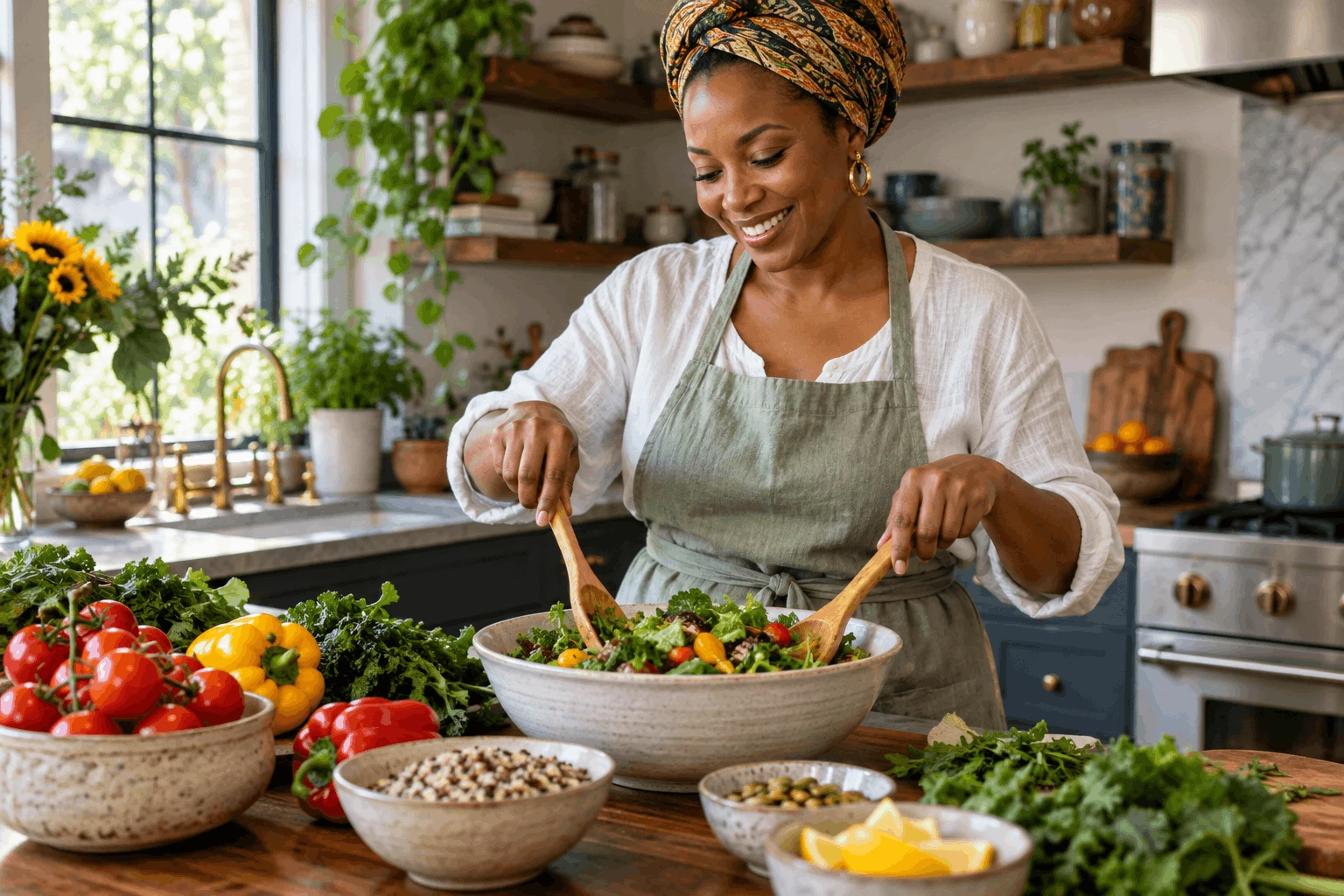
A satisfying meal can care for your body and still taste like home.
The first thing you notice is the smell: onions softening in the pan, garlic warming in oil, a pot beginning to come together. Before dinner is ready, the kitchen already feels different.
Food offers more than a collection of numbers. It carries memory, pleasure, resourcefulness, and the small satisfaction of feeding yourself something you enjoy.
Yet conversations about eating well can make an ordinary meal feel like an exam. The rules multiply. Familiar foods become suspect. You begin wondering whether a plate is healthy enough before asking whether it will satisfy you.
A more welcoming starting point is to ask what you can bring to the meal: more variety, a useful ingredient, a flavor you love, or a preparation that makes dinner possible on a busy night.
Begin with a meal you already make
Choose a familiar starting point rather than inventing an entirely new way of eating.
If rice and beans are regulars, consider which vegetables would be good alongside them. If you love a soup, think about adding another ingredient that belongs in the pot. If lunch is often a sandwich, a piece of fruit or a vegetable side may be easier than replacing the entire meal.
Harvard’s Healthy Eating Plate emphasizes vegetables and fruits, whole grains, and protein sources such as beans, fish, and poultry, with healthy plant oils. Its proportions are a flexible guide rather than a personalized prescription. Healthy Eating Plate
Your own needs may differ because of medical conditions, allergies, medications, or other factors. If you follow a prescribed eating plan, work within it and ask your clinician or dietitian about changes.
Keep your culture at the table
For Black women across African, Caribbean, American, and other traditions, food can hold a connection to people and places that matter deeply. There is room to consider nutrition without dismissing those connections.
A dish does not need to lose its identity to sit within a varied pattern of eating. You might change an accompaniment, try another preparation, or include a favorite dish alongside foods that bring different textures and flavors.
Consider a plate of seasoned beans, rice, sautéed cabbage, and fish. Or a vegetable stew served with a familiar staple. The details will depend on your tastes, access, and needs; the principle is that nourishment does not require cultural distance.
Ask older relatives how they prepared vegetables, stretched a pot of beans, or made a simple meal taste generous. There may be useful knowledge in those conversations, along with recipes worth keeping.
Let convenience help you
A bag of vegetables in the freezer can be more useful than beautiful produce you have no time to prepare. Canned beans, ready-to-use greens, and leftovers can also make a meal possible.
Compare labels when sodium, added sugar, or other ingredients matter to your needs. Choose the options that work for your budget and household.
There is no prize for beginning every dinner from scratch. Save your effort for the parts you enjoy or the tasks that make the biggest difference.
One evening, that might mean cooking a pot of food for several meals. Another night, it may mean assembling what is already available. Both can be thoughtful choices.
Use color as an invitation
Color can make a plate more appealing and encourage variety, but it is not a contest. Pale foods such as beans, oats, onions, and cauliflower can also have a place.
Try pairing different textures: something warm with something crisp, something creamy with something bright. A squeeze of lemon, fresh herbs, a familiar spice mixture, or chopped scallions can change how a simple dish feels.
You do not need every color at every meal. Buy what you will realistically eat. A small selection that gets used is more valuable than an ambitious haul that becomes waste.
Make one meal easier next week
Before shopping, name two dinners you can make without much thought and one you would enjoy trying. Check what is already in your kitchen. Build the list around those plans.
Then leave room for real life. Plans change, appetites differ, and sometimes dinner is simply whatever you can manage.
When you do sit down, give yourself a moment to taste what you made. Notice the seasoning, the texture, the memory it brings. The meal does not have to be extraordinary to offer something worth enjoying.
© 2026 TopBlackBeauty.com.

As a passionate news reporter, I am fueled by an insatiable curiosity and an unwavering commitment to truth. With a keen eye for detail and a relentless pursuit of stories, I strive to deliver timely and accurate information that empowers and engages readers.
Comments (0)